


Archives

Faith Foundations for Ministry

This course is eligible for the Get Formed! scheme, allowing students to reclaim 70% of their course fees upon completion. For more information, visit: https://pfi.edu.mt/get-formed/.

This module offers a basic introduction to key themes of the main areas of Christian theology. These include fundamental, scriptural, dogmatic, ecclesiological, and ethical theological concepts guiding the evangelising mission of the Church.

By the end of the module the learner will have:
  • become aware of what the sources of theology are;
  • gained a basic understanding of the main areas of Christian theology.

This course is intended to form and support adults who wish to become better acquainted with the basic tenets of the Catholic Faith. This course is offered in asynchronous learning mode as a foundation course before applying for other courses offered by the Pastoral Formation Institute.

Adults who do not have an academic theological background and wish to widen their knowledge on the Catholic Faith. 

Target Audience Age: 18+

TopicLecturer
The Sacred ScripturesMr Edward Wright
The Scriptures, Tradition and MagisteriumMr Edward Wright
The Christian doctrine of God of Jesus ChristMs Dorianne Cassar
The Holy SpiritDr Dorianne Buttigieg
The Church as the builder of the Kingdom of God Mr Edward Wright
The Meaning of the Sacraments and the LiturgyRev. Stephen Attard
The Catholic Social Teaching of the Church Rev. Dr Carlo Calleja


Applicants will have access to this material on the PFI`s Moodle Portal. The module is delivered in short, recorded sessions which are each about 15 minutes long. The students will be provided with a username and a password so they can watch these sessions on their own devices. The total number of minutes amounts to 8 hours.

Usernames and passwords will be sent to students within a week of payment confirmation.

This course has two exit certificate options: 
  1. Certificate of Participation

To obtain a Certificate of Participation need to watch all the online material and successfully complete all the short multiple-choice exams. 

2. Certificate of Achievement 

To obtain a Certificate of Achievement, students need to: 

  • pass the short multiple-choice online exams; 
  • and successfully complete a written assignment;

An electronic certificate will be sent via email, within a week of successfully completing the course.

Click here to view the PFI’s Grading System

AFF Level: Level 4

Total Credits: 1 Credit

Teaching and Awarding Institution: Pastoral Formation Institute

Qualifications: Every application will be considered on its individual merits. The Pastoral Formation Institute accepts a wide range of qualifications, and we always try to judge applications on the basis of academic potential. We do consider a very wide range of academic, vocational, and professional qualifications, as well as work and other appropriate experiences and skills.

Language: Primary level understanding of Maltese and English.

Digital: Knows how to access the internet and use a word processor.

Introduction to Sports Ministry

  Catholic Institute, Floriana
Module 1 Introduction to Sports Ministry
MQF

The Pastoral Formation Institute is licensed by MFHEA
(Licence #: 2013-FHI-023) as a Further and Higher Educational Institute. The Award in Introduction to Sports Ministry is accredited at EQF/MQF Level 5.

This module presents an overall description of what Sports Ministry is and its role in the Church and world today. For this reason, this module will present and explore the Global Movement, delve into the history of the interaction between religion and sport, especially in Christianity, and present Biblical and Church documents’ references to sports. This module will also present the basic values of Sports Ministry which will be further explored throughout the other three follow-up modules:

  • Youth leaders interested in Sports/Physical Activity,  
  • Sports persons (coaches, athletes, club admin. members) interested in Sports Ministry,  
  • School chaplains, PE teachers, and Teachers interested in both areas (sports & spirituality). 

Target Audience Age: 18+

CodeMode of DeliveryValue
PFE5001– 2 Half-Day Seminars
– Practicum Sessions
– 2 Lectures
2 ECTS

Lecturers:  Rev Bernard Micallef

Mode of Attendance: Part-Time
SessionDatesTimesVenue
Hal-Day Seminar21.10.202309:00 – 12:00Archbishop`s Seminary, Rabat
Tuesday24.10.202318:00 – 20:00Catholic Institute Floriana
Tuesday31.10.202318:00 – 20:00Catholic Institute Floriana
Hal-Day Seminar04.11.202309:00 – 12:00Archbishop`s Seminary, Rabat

Assessment: Written Assessment

Assessment Explanation: To engage with a Christian-based organisation and devise either a plan of how a specific sports-based programme could be set up in their respective organisation or focus on one specific event/activity that can be held within the remit of the organisation. Eg. Lenten sessions using sports etc. 


Final Award: Award in Sports Ministry

Duration: 4 sessions, part-time including:

  • Contact hours – 14 hours
  • Supervised Placement and Practice Hours – 0 hours
  • Self-Study Hours – 26 hours
  • Assessment Hours – 10 hours

Click here to view the PFI`s Grading System

Certification: A sealed Certificate together with a Certificate supplement after successful* completion of the course

*To obtain a Certificate of Achievement a student must; Attend a minimum of 80% of each module and Pass successfully the assignment

EQF/MQF Level: Level 5

Accreditation Category: Award

Total ECTS: 2 ECTS

Award Institution: Pastoral Formation Institute

Teaching Institution: Pastoral Formation Institute

MQF

The Pastoral Formation Institute is licensed by MFHEA
(Licence #: 2013-FHI-023) as a Further and Higher Educational Institute. The Award in Introduction to Sports Ministry is accredited at EQF/MQF Level 5.

Applicants must be in possession of:

  • Proficient in English  
  • Minimum Level: O level or equivalent 
  • Expressed interest in Evangelisation and Sport 
  • Participants must present POMA certification and clean police conduct. 

For courses offered in face-to-face learning and Blended Learning, it is required that applicants reside in the Maltese Islands and use their Maltese address in their application form.

For further information regarding visa requirements, head to Identity Malta’s VISA requirement for third-country nationals.

Emotional Support In The Community: Basic Skills for Pastoral Workers

For the version in English, please refer to: https://pfi.edu.mt/course/emotional-support-en/.

This course is eligible for the Get Formed! scheme, allowing students to reclaim 70% of their course fees upon completion. For more information, visit: https://pfi.edu.mt/get-formed/.

The aim of this course is to empower individuals without academic backgrounds in psychology, such as pastoral workers, volunteers, and others interested in enhancing their fundamental knowledge, skills, and attitudes for interacting effectively with parishioners or others. This course introduces participants to helping skills, theories, and approaches.

Through study and discussion, students gain awareness of tools that assist them in their work with people from diverse cultural and social backgrounds. The course provides an opportunity to reflect on methods used in their work and relationships and evaluate their effectiveness.

By the end of this course, the participant will be able to:

  • Understand the basic theories and skills of helping.
  • Know how to listen and respond appropriately.
  • Provide emotional and spiritual support.
  • Identify when to refer someone to professional help.

Individuals without an academic background in psychology, including:

  • Those who regularly provide support and companionship to colleagues and friends in their workplace, family, etc.
  • Pastoral workers, volunteers, or individuals who interact with people in need or visit residential homes.

Target Audience Age: 18+

In this session, participants will explore pastoral work’s helping skills, including active listening, providing support, and validating feelings.

In this session, participants will discuss the crucial skill of empathy in assisting others. Participants will have the opportunity to practice this skill during the session. Additionally, participants will thoroughly explore the practice of maintaining boundaries, as clear and established limits in our work contribute to safe and effective connections.

In this session, participants will cultivate self-awareness; they will be prompted to reflect on and acknowledge their strengths, challenges, beliefs, thoughts, and emotions.

In this session, participants will explore their own spiritual journey and recognize its manifestations in their personal lives and within the community. It will delve into cultural diversity, other religious denominations, and spiritual practices within the parish, examining their impact on individual and community life. Additionally, the session will address spiritual accompaniment and religious practices, differentiating between them and exploring their potential synergy.

In this session, participants will learn when to refer individuals to professional help, understand the significance of confidentiality in pastoral work, and recognize the boundaries of confidentiality.

Session
Learning how to listen, contain and validate feelings
Learning how to empathise while keeping healthy boundaries
Learning how to support others emotionally as a pastoral worker/non-professional
How to support others spiritually as a pastoral worker/non-professional
Learning when, where and how to refer someone to professional help

This course has three exit certificate options:

  1. Certificate of Attendance

To obtain a Certificate of Attendance, students must 80% of course contact hours. 

2. Certificate of Participation

To obtain a Certificate of Participation, students must attend 80% of course contact hours and pass the short multiple-choice online exam. 

3. Certificate of Achievement 

To obtain a Certificate of Achievement, students must: 

  • attend 80% of course contact hours;  
  • pass the short multiple-choice online exam; 
  • and successfully complete a Case Study Analysis;

Every application will be considered on its individual merits. The Pastoral Formation Institute accepts a wide range of qualifications, and we always try to judge applications on the basis of academic potential. We do consider a very wide range of academic, vocational, and professional qualifications, as well as work and other appropriate experiences and skills.

Language: Participants must have a primary level understanding of Maltese and English.

Digital: Participants must know how to access the internet and use office suites.

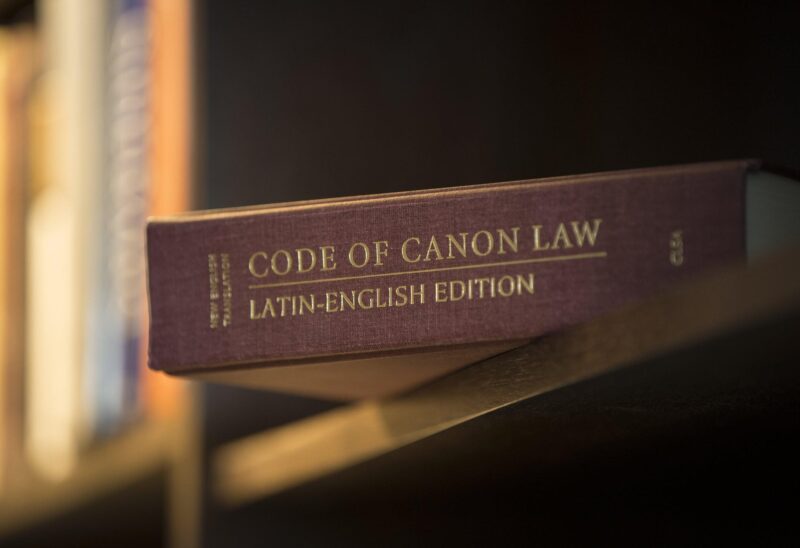
Canon Law and Institutes of Consecrated Life

  Archdiocese of Malta, St Calcedonius Square, Floriana
A 20% discount will be given when more than 5 applicants
from the same congregation apply for this course.

This course aims at accompanying consecrated men and women by inviting them to deepen their formation in Canon Law in the context of Consecrated Life. 

Learning Outcomes:

By the end of this course, the participants will become aware of what the teachings of Canon Law in the realm of consecrated life are and be able to reflect, analyse and synthesise the applicability of Canon Law in various circumstances. 


  • Men and women members of the consecrated life
  • Men and women of societies of apostolic life

Target Audience Age: 18+

Session 1:     The ecclesial magisterium and consecrated life

Session 2:     Documents from Vatican Council II until today  

Session 3:     Documents from Vatican Council II until today  

Session 4:     Introduction to Canon Law and consecrated life within the                                                           Code of Canon Law (CIC)

Session 5:     History and forms of consecrated Life

Session 6:     The evangelical counsels

Session 7:     Religious life: admission and separation

Session 8:     Governance of institutes

Session 9:     Administration of goods

Session 10:   The apostolate of institutes

Session 11:    Relationship with clergy and diocesan bishop

Session 12:   Related matters to consecrated life in Canon Law

Wednesdays: 16:30 – 18:30

September20th, 27th
October11th, 18th, 25th
November8th, 15th, 22nd, 29th
December6th

This course will conclude with a retreat on Saturday 9th December 2023.

Certification:  

This course has three exit certificate options: 

  1. Certificate of Attendance

To obtain a Certificate of Attendance, students must attend 80% of all contact hours.

   2. Certificate of Participation

To obtain a Certificate of Participation, students must attend 80% of all contact hours and pass the short multiple-choice online assessment. 

  3.  Certificate of Achievement 

To obtain a Certificate of Achievement, students must: 

      • attend 80% of all contact hours;
      • pass the short multiple-choice online exam; 
      • and successfully complete a written assignment in English.

Teaching and Awarding Institution: Pastoral Formation Institute

Language: Proficient in English.

Digital Competences: Computer literate (how to access the internet and use a word processor).

20% discount will be given when more than 5 applicants
from the same congregation apply for this course.

Application Form

Application Form

Please select a Gravity Form
Applications for this course are now closed.

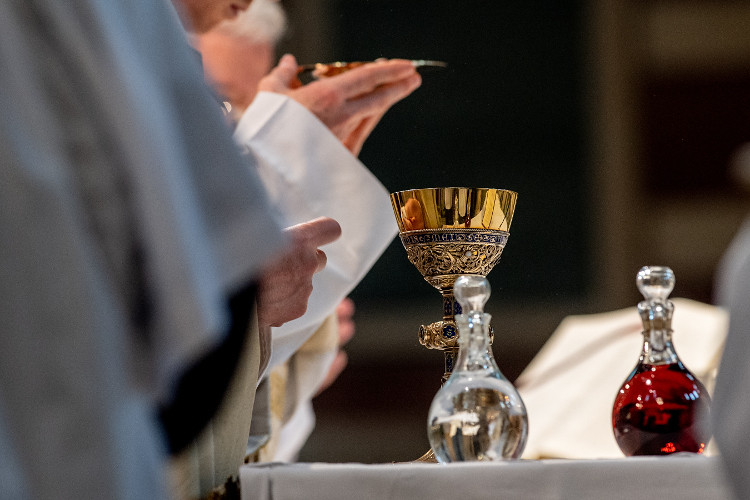
Introduction to Holy Mass

  Online
introduction to holy mass

Course Description

The course Introduction to the Holy Mass is designed to give all those involved in the preparation of the Liturgy, formation for a better understanding of the different parts of the Eucharistic celebration. In light of Sacrosanctum Concilium’s desire to restore the celebration of the Mass to the vigour it enjoyed in Patristic times the course intends to explain the liturgico-historical roots of the different rites of the Mass for a better understanding of the celebration of the Eucharist according to the post-conciliar Missale Romanum. Moreover, such knowledge will enable the participants to put into practice the much desired active participation of the faithful in the celebration of the Mass.  By the end of this course the student will:  

  • have a basic liturgical and theological understanding of the celebration of the Mass according to the Missale Romanum 1975. 
  • know the language in which liturgical worship is explicated.  
  • know the historical roots of the different parts of the Mass. 
  • learn most matters concerning the different rites which compose the celebration of the Mass.   
  • acquire a deeper understanding and appreciation of the different roles, members of the assembly hold.  
  • grasp the spiritual meaning that these roles entail

Intended For

  • Extraordinary ministers of Holy Communion,
  • Lectors, Animators,
  • Choir members,
  • members of the Parish Liturgical Commission
  • and those interested in understanding better the celebration of the Eucharist.

Curriculum

Part 1: The Introductory Rites  

  • The Introit
  • Greeting of the Altar and of the Assembly  
  • The Act of Penance
  • The Kyrie Eleison
  • The Gloria
  • The Collect 

Part 2: The Liturgy of the Word   

  • The Readings and the Responsorial Psalm
  • The Acclamation and the Gospel
  • The Homily
  • The Profession of Faith
  • The Prayer of the Faithful. 

Part 3: The Liturgy of the Eucharist  

  • The Offertory
  • The Preface
  • The Eucharistic Prayer I
  • The Eucharistic Prayer II
  • The Eucharistic Prayer III
  • The Eucharistic Prayer IV
  • The Eucharistic Prayer V
  • The Eucharistic Prayer of Reconciliation I and II 

Part 4: The Communion Rite

  • The Lord’s Prayer
  • The Rite of Peace
  • The Fraction
  • Communion
  • The Concluding Rites

Calendar

The course is delivered in short, recorded sessions which are each about 15 minutes long. The student will be provided with a username and a password so s/he can watch these sessions at his/her own computer or other technological device. The total number of minutes amount to 6-7hrs including the assessment.

Usernames and passwords will be sent to students within a week of payment confirmation.


Assessment & Certification

Assessment: Multiple choice test after each online session. The pass mark is 60%. 

Certificate: Certificate of completion will be awarded to those who complete all the sessions and pass all the assessments.

An electronic certificate will be sent via email, within a week of successfully completing the course.

Awarding and Teaching Institution: Pastoral Formation Institute


Entry Requirement

Every application will be considered on its individual merits. The Pastoral Formation Institute accepts a wide range of qualifications, and we always try to judge applications on the basis of academic potential. We do consider a very wide range of academic, vocational, and professional qualifications, as well as work and other appropriate experiences and skills.

Introduction to Holy Communion

  Online

This course is eligible for the Get Formed! scheme, allowing students to reclaim 70% of their course fees upon completion. For more information, visit: https://pfi.edu.mt/get-formed/.

Course Description

The course Introduction to the Eucharist is designed to give the extraordinary minister formation and direction for distributing communion during masses and to be a guide to help him/her in taking communion to those who are unable to join the community in person. By the end of this course the student will: 

  • have a basic biblical and theological understanding of the teachings related to the Eucharist.   
  • know the language in which liturgical worship is explicit. 
  • learn most matters concerning the rite of Communion.  
  • learn to appreciate more the sacrament of Holy Communion. 
  • acquire a deeper knowledge of the role of the extraordinary minister. 
  • grasp the spiritual meaning that this role entails

Intended For

  • Extraordinary ministers of Holy Communion who provide a service during church masses, in residential elderly homes or homebound sick persons.   
  • Those who wish to learn to appreciate more the sacrament of Holy Communion. 
  • Those who are starting their service as extraordinary ministers. 

Please Note: Doing this course does not entitle the student to become an extraordinary minister of Holy Communion. Extraordinary ministers are chosen by the pastor of the parish/community. 


Curriculum

Part 1: God With Us – Dogmatic Theology 
  1. Christian theology on God’s revelation in the Eucharist.  
  2. The communitarian dimension of the Eucharist.  
  3. Eucharistic miracles around the world.  
  4. Re-actualisation – understanding the past, present and future dimensions of the sacraments.  
  5. Terminology for the Blessed Sacrament.  
Part 2: The Biblical Foundations of the Eucharist
  1. The scriptural perspective of the Church’s teachings on the Eucharist. 
  2. The foreshadowing of the Eucharist in the Old Testament. 
  3. The Last Supper narratives. 
  4. The testimony of St Paul on the Eucharist. 
  5. Exegesis. 
 
Part 3: The Eucharist in Daily Life 
  1. The role of the extraordinary minister at mass and at home. 
  2. The effects of the Eucharist on the community. 
  3. Cultivating my relationship with God through the Eucharist. 
  4. Way of life of the extraordinary minister. 
  5. The spiritual dimension of the role of the Eucharistic minister – testimonials:  

Calendar

The course is delivered in short, recorded sessions which are each about 18 minutes long. The student will be provided with a username and a password so s/he can watch these sessions on his/her own device. The total number of minutes amounts to 5-6 hours including the assessment.

Usernames and passwords will be sent to students within a week of payment confirmation.


Assessment & Certification

Assessment: Multiple choice test after each online session. The pass mark is 60%. 

Certificate: Certificate of completion will be awarded to those who complete all the sessions and pass all the assessments.

An electronic certificate will be sent via email, within a week of successfully completing the course.

Awarding and Teaching Institution: Pastoral Formation Institute


Entry Requirement

Every application will be considered on its individual merits. The Pastoral Formation Institute accepts a wide range of qualifications, and we always try to judge applications on the basis of academic potential. We do consider a very wide range of academic, vocational, and professional qualifications, as well as work and other appropriate experiences and skills.

Benedictine Spirituality Today

  Ta` Mlit, Mosta
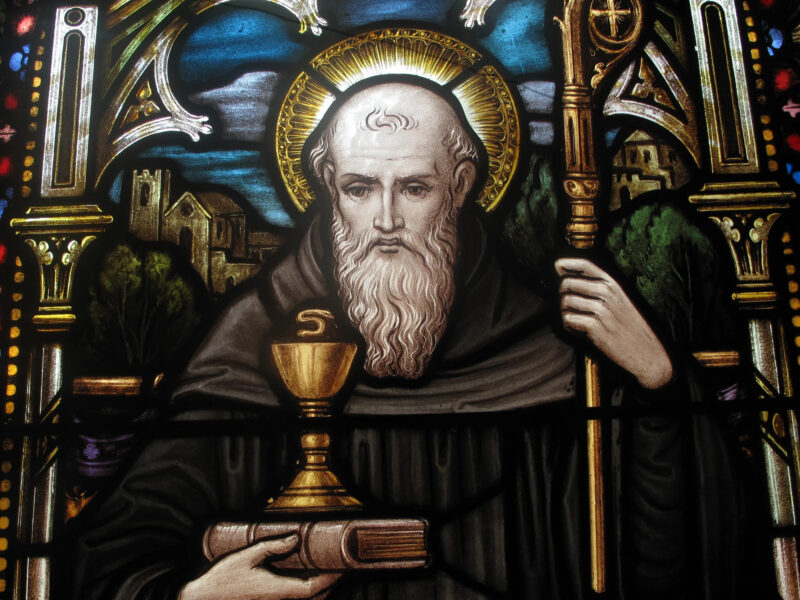
St Benedict

The course Benedictine Spirituality for Today is designed to introduce people to the life and teachings of St Benedict of Norcia (480 – 547), Patriarch of Western Monastics, and Patron of Europe. St Benedict is well-known for his Rule, in which he carefully integrates prayer, manual labor, and study into a well-rounded daily routine.  

His Rule for Monasteries is steeped in Sacred Scripture and is presented as a small guide for beginners. This course shows the Rule of St Benedict as a handbook whose teachings can be readily applied to twenty-first century Christians willing to live their Christian lives in a parish, school, hospital community, or any other community, which for them would be a school of the Lord’s Service’. The ultimate aim is holiness and beholding the face of God. 

Currently, enrolment is not open for this course. For further information contact us on [email protected]
  • have a basic knowledge of the life of St Benedict of Norcia as described in the Dialogues of St Gregory the Great;   
  • be conversant with the major themes in the Rule of St Benedict; 
  • be able to describe Benedictine Spirituality as a way of receiving and giving Blessings within the context of a School of the Lord’s Service; 
  • have read at least the most important parts of the Rule of St Benedict; 
  • be able to identify some major Benedictine geographic landmarks today; 
  • have come across some of the commentators on the Rule of St Benedict; 
  • have been introduced in general terms to Basil and Cassian, as indicated by St Benedict himself; 
  • have been introduced in general terms to the life and writings of Bernard of Clairvaux. 
  • attempt to work out a spirituality based on Benedict’s teachings for the workplace, the family, leisure time, and the digital world of social media 
  • confidently discuss the values and virtues that St Benedict promotes in his Rule; 
  • have had time to reflect on how to apply Benedictine values in their daily lives.
  1. Those who are in search of God in their daily lives.  
  2. Beginners in the spiritual life who would like to explore ‘a small rule for beginners’ as they journey towards God. 
  3. People are interested in Saint Benedict as a master and guide of the spiritual life.  

People who would like to explore what Saint Benedict may have to offer for their spiritual journey. 

Target Audience Age: 18+

Currently, enrolment is not open for this course. For further information contact us on [email protected]
Lecture 1: Introduction
  • Benedictine Places and things: Via Benedicti, Pax inter Spinas, Pax, the Benedictine Medal, and St Benedict from the Dialogues of St Gregory the Great Book 2
    Reading St Benedict 1 – Introduction on preparing a personalized list of Benedict’s maxims 
  • Prologue, Chapter 73, texts on the Abbot
Lecture 2:
  • Texts on Meekness and Obedience
  • Texts on Prayer and Liturgy
Lecture 3:
  • A school of the Lord’s Service
  • Texts on Synodality
Lecture 1:
  • The Three Benedictine Vows – Obedience, Stability, and Conversion of Manners
  • The Three Components of the Benedictine Day – Ora et Labora et Lege
Lecture 2:
  • The Ten Benedictine Values – I: The Three Ls – Listening, Lectio Divina, Liturgy
  • The Ten Benedictine Values – II: The Three Hs – Humility, Humanity and Hospitality
Lecture 3:
  • The Ten Benedictine Values – III: The Four Ss – Spiritual Fatherhood, Stability, seeking God, and Silences
  • The seventy-two instruments of good works

Lecture 1:
  • Towards a Benedictine Spirituality of the workplace for managers and others
  • Towards a Benedictine Spirituality of Parish Life
Lecture 2:
  • Hints from Benedict that may be applied to the digital world of social media
  • Spiritual Direction in the Rule of St Benedict
Lecture 3:
  • Reading Basil and Cassian – selected texts
  • Bernard of Clairvaux – the purification of Benedict


 The course is delivered over 27 contact hours over 9 weeks. The 3-hour sessions are held weekly on Mondays between 5:30 pm and 8:30 pm.

Venue: Ta` Mlit, Mosta
Currently, enrolment is not open for this course. For further information contact us on [email protected]
Part 1 : Reading the Dialogues of St Gregory the Great and The Rule of St Benedict
Lecture 1Monday 17th October 20225:30 pm – 8:30 pm
Lecture 2Monday 24th October 20225:30 pm – 8:30 pm
Lecture 3Monday 31st October 20225:30 pm – 8:30 pm
Part 2: Benedictine Spirituality in Numbers – The Major Themes of The Rule of St Benedict
Lecture 1Monday 7th November 20225:30 pm – 8:30 pm
Lecture 2Monday 14th November 20225:30 pm – 8:30 pm
Lecture 3Monday 21st November 20225:30 pm – 8:30 pm
Part 3: Applying Benedict
Lecture 1Monday 28th November 20225:30 pm – 8:30 pm
Lecture 2Monday 5th December 20225:30 pm – 8:30 pm
Lecture 3Monday 12th December 20225:30 pm – 8:30 pm

Certification:  

This course has three exit certificate options: 

  1. Certificate of Attendance

To obtain a Certificate of Attendance, students must attend at least 80% of the course’s contact hours. 

2. Certificate of Participation

To obtain a Certificate of Participation, students need to meet the attendance criteria and successfully conclude the three-course multiple-choice online exams. 

3. Certificate of Achievement 

To obtain a Certificate of Achievement, students must: 

  • attend at least 80% of the course`s contact hours;  
  • pass the three short multiple-choice online exams; 
  • and successfully complete a short essay of at least 500 words;

Teaching and Awarding Institution: Pastoral Formation Institute

Qualifications: Every application will be considered on its individual merits. The Pastoral Formation Institute accepts a wide range of qualifications, and we always try to judge applications on the basis of academic potential. We do consider a very wide range of academic, vocational, and professional qualifications, as well as work and other appropriate experiences and skills.

Language: Applicants are required to have an end-of-primary school level of understanding of Maltese and English

Digital: Applicants are required to be digitally literate, including knowing how to access the internet and use a word processor

M.A. in Bioethics

The Master of Arts in Bioethics is an inter-disciplinary programme that encourages research in bioethics and enables a systematic and critical understanding of the theoretical foundations and methodology of this area. The course aims to foster a culture respectful of bioethics amongst biomedical and healthcare professionals, and train professionals to face the contemporary bioethical challenges.

The different modules of the programme cover the following topics: ethical issues in genetics; ethics at the edges of human life; the best interests of the child; neuroethics, mental health and psychiatric ethics; bioethics, law and policy; priority setting, justice and resource allocation; suffering, spirituality and palliative care; emerging European values and policies in bioethics; and research ethics.

Full details here

Recommended for
 health care professionals, administrators of healthcare facilities, psychologists, social workers, philosophers, lawyers and teachers. It is accepted for promotion purposes in the nursing and allied health professions.

Opening next: October 2025 (offered every 2 years)

Course duration: 6 semesters part-time (evening)

Study mode: taught (2 years) and research (1 year)

The Faculty of Theology offers various courses in different areas of theology. For further information and to apply for these courses visit www.um.edu.mt/theology

M.A. in Business Ethics

The Master of Arts in Business Ethics is an inter-disciplinary programme that introduces candidates to the important ethical issues, concepts and theories linked to the context of business activities and related economic environments. Offered by the Faculty of Theology in collaboration with the Faculty of Laws and the Faculty of Economics, Management and Accountancy (FEMA), the course brings together the fields of business studies, philosophical ethics, marketing, public policy, law, and moral theology.


The modules of the programme
 cover the following topics:

  • Financial ethics
  • Human resources and relationships 
  • Sustainability, environment and ethics 
  • Management and marketing ethics
  • Corporate governance and culture of ethics
  • Role of government, politics, economics and business in a globalised world 
  • Ethical theories and the practice of business   


Recommended for
 business practitioners (directors, company secretaries, compliance officers, ethics officers), bank officials, business academics, philosophers, lawyers, accountants, trade union officials, representatives of government and non-governmental organisations, and conscientious stakeholders everywhere. 

Read what our alumni say about the course.

Opening next: October 2025 (offered every 3 years)

Course duration: 6 semesters part-time (evening)

Study mode: taught (2 years) and research (1 year)

The Faculty of Theology offers various courses in different areas of theology. For further information and to apply for these courses visit www.um.edu.mt/theology

M.A. in Catholic School Leadership

The Master of Arts in Catholic School Leadership is a joint inter-disciplinary programme that is intended to train and empower candidates involved in the leadership of schools and other faith entities. It aims at fostering research and good practices in managerial and leadership skills, as well as reflective practice in Catholic leadership. 

The different modules of the programme cover the following topics: educational management and leadership; fundamentals of educational research; critical issues for school leaders; effective leadership in schools; applied educational research methods; professional development models; Catholic understanding of humanity for contemporary culture; leadership in the Church; psychology of leadership; nurturing professional learning communities in Maltese schools; contemporary Catholic institutions; and developing emotional and relational competence. 

The course is recommended for those interested or already involved in the running of Catholic schools and/or faith formation institutions, and those interested in enriching their profession with the philosophical vision of Catholic leadership. 

Course duration: 6 semesters part-time (evening) 

Study mode: taught (2 years) and research (1 year) 

Opening next: October 2025 (offered every 3 years)

The Faculty of Theology offers various courses in different areas of theology. For further information and to apply for these courses visit www.um.edu.mt/theology