


Archives

Mark’s Good News

This course is eligible for the Get Formed! scheme, allowing students to reclaim 70% of their course fees upon completion. For more information, visit: https://pfi.edu.mt/get-formed/.

This five‑session course offers a concise yet enriching journey through the Gospel of Mark, guiding participants from an introductory overview into four key themes that shape Mark’s unique portrait of Jesus. Together, we explore the power of Jesus’ miracles, the depth and challenge of his parables, the demanding but transformative call to discipleship, and the stark, compelling drama of the Passion narrative. The course invites learners to engage both heart and mind as they encounter Mark’s urgent proclamation of the Good News.

This course is suitable for pastoral workers helping in the Ministry of the Word. It is also ideal for people who would like to delve deeper in knowledge about the Gospel of Mark and all Christians who would like to continue to invest in their relationship with God

Target Audience Age: 18+

The course will take place on Tuesdays from 6:00pm to 8:00pm at

Ta’ Mlit Pastoral Centre, Mosta.

Students have the option to join this course online via Zoom

DateSession
14th October 2026Introduction to the Gospel
21st October 2026Miracles in Mark
28th October 2026Parables in Mark
4th November 2026Discipleship in Mark
11th November 2026The Passion in Mark

This course has three exit certificate options:

1. Certificate of Attendance

The student will receive a Certificate of Attendance when attending a minimum of 80% of all contact hours for this course.

2. Certificate of Participation

The student will receive a Certificate of Participation when attending a minimum of 80% of all contact hours for this course and pass from a short multiple-choice exam.

3. Certificate of Achievement

To obtain a Certificate of Achievement, students must attend a minimum of 80% of all contact hour and pass from a short multiple-choice exam and an assignment.

Language: Applicants must be proficient in both Maltese and English.

Digital: Applicants must be digitally literate particularly, in use of office suites and internet access.


A Merciful Heart and Mind (in a Parish context)

This course introduces diaconia as the Church’s mission of service within parish life. Participants will explore practical and concrete ways of responding to human need through charity, solidarity, and pastoral care. The course equips participants with tools to plan, coordinate, and sustain parish-based diaconia rooted in Gospel values and lived faith.

All interested but especially Diakonia Pastoral Workers in a parish context.

Target Audience Age: 18+

The course will take place on Wednesdays from 6:00pm to 8:00pm at Ta’ Mlit Pastoral Centre, Mosta

Students can join online via Zoom

DateSession
2nd September 2026Diaconia as one of the four pillars of the Catholic faith
9th September 2026Diaconia as an integral part of the life of the Saints 
16th September 2026Diaconia as an integral part of the life of the Saints 
23rd SeptemberBoundaries and Mercy in Real Life
30th September6 – 7pm – Co-Responsibility and Working Together in the Parish
7 – 8pm – Building a merciful parish. 

This course has three exit certificate options:

1. Certificate of Attendance

The student will receive a Certificate of Attendance when attending a minimum of 80% of all contact hours for this course.

2. Certificate of Participation

The student will receive a Certificate of Participation when attending a minimum of 80% of all contact hours for this course and pass from a short multiple-choice exam.

3. Certificate of Achievement

To obtain a Certificate of Achievement, students must attend a minimum of 80% of all contact hour and pass from a short multiple-choice exam and an assignment.

Language: Applicants must be proficient in both Maltese and English.

Digital: Applicants must be digitally literate particularly, in use of office suites and internet access.
Running, Returning, Renewed: A Journey Through Jonah

This verse‑by‑verse study of the Book of Jonah examines the text in its historical, literary, and theological context. Participants will analyse Jonah’s call, his resistance, the narrative’s use of irony, the response of the sailors and the Ninevites, and God’s final challenge to the prophet. The course also considers how Jonah is referenced in the New Testament to understand how early Christian interpretation engaged with this story. The aim is to provide a clear, structured exploration of the book’s themes, its portrayal of divine mercy and human reluctance, and its ongoing relevance for readers today.

This course is suitable for pastoral workers helping in the Ministry of the Word. It is also ideal for people who would like to delve deeper in knowledge about Jonah and all Christians who would like to continue to invest in their relationship with God.

Target Audience Age: 18+

The course will take place on Wednesdays from 6:00pm to 8:00pm at Ta’ Mlit Pastoral Centre, Mosta

Students can join online via Zoom

DateSession
8th July 2026Jonah 1-2
15th July 2026Jonah 3-4
22nd July 2026Jonah in the NT

This course has three exit certificate options:

1. Certificate of Attendance

The student will receive a Certificate of Attendance when attending a minimum of 80% of all contact hours for this course.

2. Certificate of Participation

The student will receive a Certificate of Participation when attending a minimum of 80% of all contact hours for this course and pass from a short multiple-choice exam.

3. Certificate of Achievement

To obtain a Certificate of Achievement, students must attend a minimum of 80% of all contact hour and pass from a short multiple-choice exam and an assignment.

Language: Applicants must be proficient in both Maltese and English.

Digital: Applicants must be digitally literate particularly, in use of office suites and internet access.

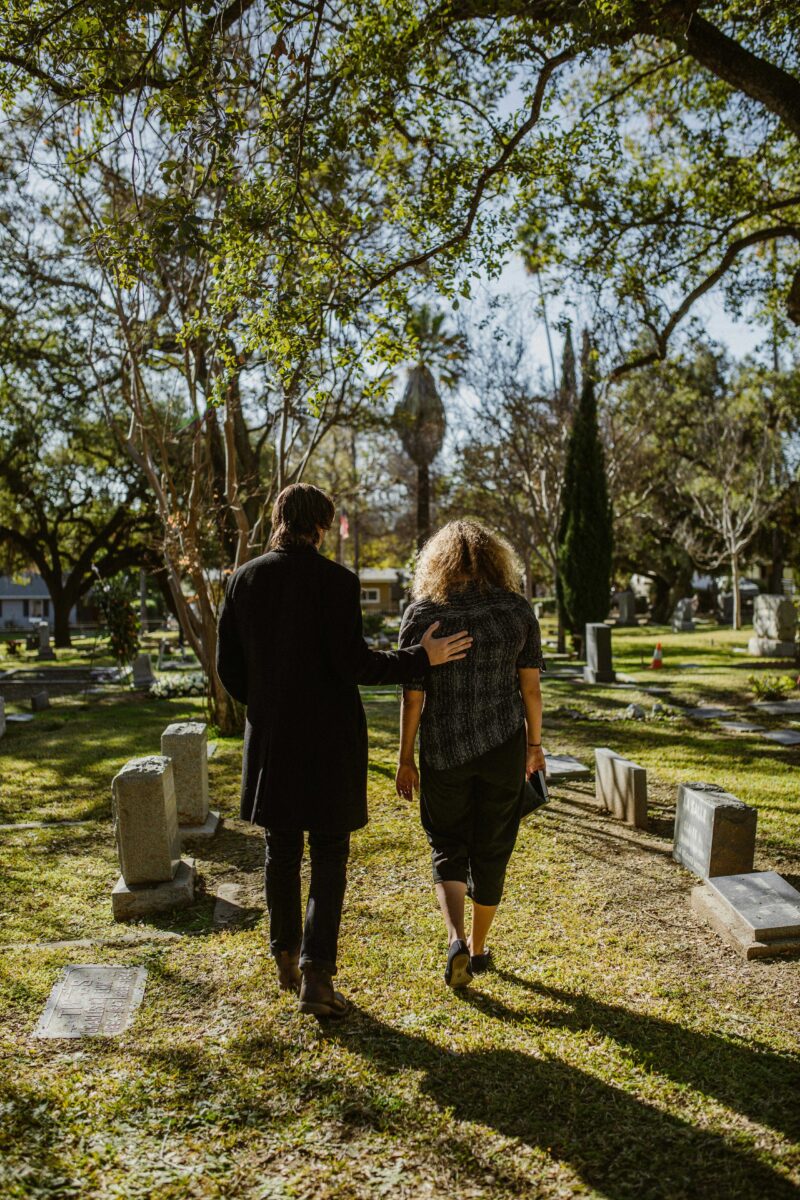
Walking with the Bereaved: Understanding Grief and Pastoral Care

  Dar Ommna Marija, Siġġiewi

This introductory course is designed for pastoral workers and lay people who assist the funeral arrangements and preparations within the parish together with individuals who offer support to mourning individuals. The course aims to equip participants with essential training and awareness to provide compassionate and emotionally sensitive support to grieving individuals.

This course is designed for pastoral workers who assist with funeral arrangements and preparations within the parish and other lay people who support mourning individuals.

Target Audience Age: 18+

The course will take place on Mondays from 6:00pm to 8:00pm

DateSession
18th May 2026Understanding Grief and Bereavement
25th May 2026Types of Dynamics of Grief
1st June 2026Grief in Families and Communities
8th June 2026Pastoral Accompaniment and Intervention
15th June 2026Walking with the Bereaved Beyond the Funeral

This course has three exit certificate options:

1. Certificate of Attendance

The student will receive a Certificate of Attendance when attending a minimum of 80% of all contact hours for this course.

2. Certificate of Participation

The student will receive a Certificate of Participation when attending a minimum of 80% of all contact hours for this course and pass from short multiple-choice exam.

3. Certificate of Achievement

To obtain a Certificate of Achievement, students must attend a minimum of 80% of all contact hour and pass from a short multiple-choice exam and an assignment.

Language: Applicants must be proficient in both Maltese and English.

Digital: Applicants must be digitally literate particularly, in use of office suites and internet access.
Prayer Spaces at Easter

This course is eligible for the Get Formed! scheme, allowing students to reclaim 70% of their course fees upon completion. For more information, visit: https://pfi.edu.mt/get-formed/.

This experiential course invites participants to journey from the joy of Easter to the fire of Pentecost through themed Prayer Spaces. Students will first engage in the prayer spaces themselves, immersing in reflection on the themes of Easter. They will process their experience in small groups and then in a larger plenary discussion. Practical guidance and resources will then be provided to equip participants with the skills needed to create and lead meaningful prayer space encounters for others in their own settings.

This course is designed for all those who wish to help children, young people, and adults grow in their prayer life — namely, educators, catechists, youth leaders, youth ministers, religious counsellors, chaplains, lay chaplains, priests, and religious.

Target Audience Age: 18+

The course will take place on Saturdays from 9:00am to 12:00pm.

DateSession
11th April 2026From Encounter to Experience –
Discovering Prayer Spaces as Pathways of Resurrection
18th April 2026Co-Creating with God –
Bringing Prayer Spaces to Life

This course has three exit certificate options:

1. Certificate of Attendance

The student will receive a Certificate of Attendance when attending a minimum of 80% of all contact hours for this course.

2. Certificate of Participation

The student will receive a Certificate of Participation when attending a minimum of 80% of all contact hours for this course and pass from short multiple-choice exam.

3. Certificate of Achievement

To obtain a Certificate of Achievement, students must attend a minimum of 80% of all contact hour and pass from a short multiple-choice exam and a reflective journal.

Language: Applicants must be proficient in both Maltese and English.

Digital: Applicants must be digitally literate particularly in the use of office suites and of the internet, to both of which they must have access.

Catholic Pastoral Care in Elderly Homes and Hospitals

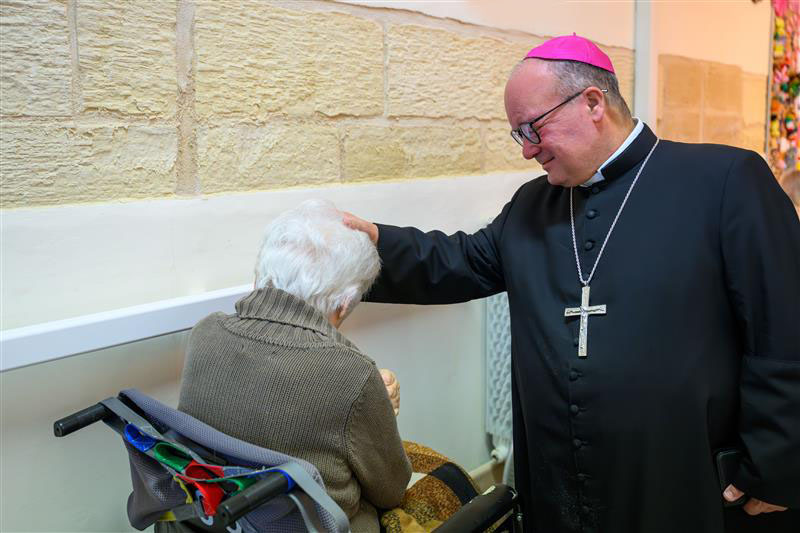
This course equips pastoral workers, Eucharistic ministers, and volunteers with the practical skills and spiritual sensitivity needed for Catholic pastoral care in elderly homes. It emphasizes leading prayer moments, distributing Holy Communion, and visiting the elderly, including hospital settings and room-to-room ministry. Participants will develop a compassionate, Christ-centred approach rooted in Catholic teaching and pastoral practice.

• Volunteers in elderly homes
• Lay pastoral workers
• Parish volunteers
• Religious sisters or brothers serving in care homes
• Seminarians in pastoral formation

Target Audience Age: 18+

The course will take place on Mondays from 6:00pm to 8:00pm at Ta’ Mlit Pastoral Centre, Mosta.

Students have the option to join this course online via Zoom.

DateSession
16th February 2026 Foundations of Catholic Pastoral Care
23rd February 2026Spiritual Needs of the Elderly and Hospital Patients
2nd March 2026Leading Moments of Prayer
9th March 2026Room-to-Room Visits and Hospital Ministry
16th March 2026Ministering Holy Communion
23rd March 2026Pastoral Challenges and Ethical Considerations

This course has three exit certificate options:

1. Certificate of Attendance

The student will receive a Certificate of Attendance when attending a minimum of 80% of all contact hours for this course

2. Certificate of Participation

The student will receive a Certificate of Participation when (in addition to meeting the attendance criteria above) they successfully complete a short online assessment.

3. Certificate of Achievement

The student will receive a Certificate of Achievement when (in addition to meeting the attendance criteria above) they successfully complete all assessments, including a written assignment.

Language: Applicants must be proficient in both Maltese and English.

Digital: Applicants must be digitally literate particularly, in use of office suites and internet access.

Preparing a Formative Path for Young People in Organised Ministry

  Ta’ Mlit Pastoral Centre, Mosta

This course is eligible for the Get Formed! scheme, allowing students to reclaim 70% of their course fees upon completion. For more information, visit: https://pfi.edu.mt/get-formed/.

A thriving youth ministry requires intentional planning and a deep understanding of the young people it serves. This course explores the importance of a structured framework in ensuring spiritual growth, engagement, and formation throughout the year. Participants will learn how to assess their youth groups’ unique needs, integrate liturgical and formative elements, and create sessions that resonate with their social and spiritual contexts. The role of discernment in ministry will also be addressed, equipping leaders with tools to seek God’s guidance in their planning. Through hands-on activities, youth leaders will develop a comprehensive, adaptable ministry plan aligned with parish life. Peer discussions and feedback from facilitators will refine these plans, fostering collaboration and shared leadership. By the end of the course, participants will leave with practical strategies to build a dynamic and purposeful youth ministry that nurtures lasting faith formation.

  • Youth leaders

Target Audience Age: 18+

TBA

This course has two exit certificate options:

1. Certificate of Attendance

The student will receive a Certificate of Attendance when attending a minimum of 80% of all contact hours / when viewing all the videos of this course.

2. Certificate of Achievement

The student will receive a Certificate of Achievement when (in addition to meeting the attendance criteria above) they successfully complete a reflective journal.

Language: Applicants must be proficient in both Maltese and English.

Digital: Applicants must be digitally literate particularly in the use of office suites and of the internet, to both of which they must have access.

Called to Accompany: Formation for Facilitators and Helpers

  Archbishop's Curia - Media Room

Called to Accompany is a formation course for those called to facilitate Catholic support groups and help in activities for separated persons. The course offers practical and spiritual tools to accompany others with compassion, integrity, and faith. It includes sessions on group dynamics, safeguarding, and the spiritual foundations of this ministry, helping facilitators and helpers to create safe, respectful, and hope-filled environments rooted in the Church’s care.

  • Facilitators leading support groups in parishes
  • Members of subcommittees helping in social events; retreats and conferences/seminars

Target Audience Age: 18+

The course will take place on Saturdays from 9:00am to 12:30pm at The Archbishop’s Curia

DatesSession
10th January 2026Group Dynamics
24th January 2026Safeguarding (*)
7th February 2026Spirituality from Bible Texts
(*) Safeguarding Children & Vulnerable Adults

This lesson delves into the essential principles of safeguarding, focusing on creating safe environments for children, young people, and vulnerable adults. By the lesson’s conclusion, students will be well-versed in safeguarding policies, understand the core principles underlying safeguarding, and recognize various types of abuse along with their signs and symptoms. They will also learn how to handle disclosures of abuse, maintain professional boundaries, identify poor practices, and comprehend their legal obligations under the Protection of Minors (Registration) Act (2011) and the Minors Protection Act (2019).

This lesson is offered in-person and continues with an online session namely:

  1. 3 hours – In person session (Face-to-Face Learning) dated 24th January 2026
  2. 2 hours – recorded material which can be accessed on the PFI`s Moodle Portal (Blended Learning)

An additional Certificate of Participation will be awarded to students who successfully complete the course multiple-choice test. An MFHEA-accredited Certificate of Achievement will be awarded to students who successfully complete the safeguarding component, pass the short multiple-choice online exam, and submit a reflective journal.

This course has two exit certificate options:

1. Certificate of Participation

The student will receive a Certificate of Participation when attending all contact hours (100%) for this course and successfully completing and passing 15 short multiple-choice questions on the first and third lecture available on the Moodle platform.

2. Certificate of Achievement

The student will be awarded a Certificate of Achievement upon meeting the attendance criteria outlined above, successfully completing the multiple-choice assessment, and submitting a written assignment.

Language: Applicants must be proficient in both Maltese and English.

Digital: Applicants must be digitally literate particularly, in use of office suites and internet access.

Postgraduate Certificate in Pastoral Care and Chaplaincy in Schools

MQF

The Pastoral Formation Institute is licensed by MFHEA
(Licence #: 2013-FHI-028) as a Further and Higher Educational Institute. The Postgraduate Certificate in Pastoral Care and Chaplaincy in Schools is accredited at EQF/MQF Level 7, as a Higher Education Programme.

Students who successfully complete this course may apply for the Get Qualified Scheme which will enable them to benefit from a tax credit of 70% of the costs incurred (i.e. €595.00 will be refunded for this course).

Schools provide a holistic environment that fosters the pursuit of truth, the development of healthy critical thinking, and the creation of spaces where individuals of diverse faiths can question, reflect, pray, and build communities of mutual acceptance. In this challenging yet enriching context, the balance of faith and reason, supported by pastoral and biblical theology, offers a solid foundation for School Pastoral Care and Chaplaincy.

Moreover, Pastoral Care and Chaplaincy in schools serve as bridges connecting faith with culture, and spirituality with the technocratic realm of contemporary society. The promotion of this mindset and its practical application are strengthened by empowering school leadership and pedagogy to embrace and uphold essential values, particularly Gospel values, which are crucial in our empirically driven, digitally oriented society.

This will be achieved through:

  • A deeper introduction to and study of the bridge between faith and reason, biblical and pastoral theology (Modules 1 and 2).
  • An in-depth understanding of the role of Pastoral Care and Chaplaincy in a pluralistic school environment through multiculturalism, inter-religious dialogue, and engagement with the technocratic realm (Module 3).
  • Insights from Pastoral Theology on building communion between human beings and with God (Module 3).
  • An appreciation for the need for spiritual accompaniment and the stages of spiritual development in young people, youth, and adults (Module 4).
  • The development of practical methods for designing, leading, and evaluating liturgical and religious activities (Module 4).
  • Professional ministry that enriches the school ethos, leadership, and pedagogy with values that enable transformative experiences, thus inviting course participants to evaluate and integrate the vision and values proclaimed (Module 5).

This course is open to all eligible individuals involved in the educational sector or with an expressed interest in working in this area.

Lectures will take place on Wednesdays, starting from 30 September 2026, from 3:30pm to 6:30pm at the Ta’ Mlit Pastoral Centre in Mosta.

You can access the full course calendar via the following link:

https://pfi.edu.mt/wp-content/uploads/2026/03/Pastoral-Care-Level-7-Timetable.pdf

CodeMode of DeliveryValue
PFE7001In-person (Face-to-Face Learning)6 ECTS

Through this module participants will be able to explore the important logical and authoritative relationship between faith, revelation and reason all of which are the principal sources of Catholic living.

CodeMode of DeliveryValue
PFE7002In-person (Face-to-Face Learning)6 ECTS

Through this module participants will be able to: Explore the application of Biblical theology within the framework of school pastoral care and within the School Chaplaincy setting. It aims to equip participants with a comprehensive understanding of how Biblical Narratives can inform and enhance pastoral care practices within educational settings. The module covers theological concepts, pastoral strategies and practical skills necessary for effective chaplaincy work in schools, focusing on the psychological, emotional, spiritual, and ethical development of students.

CodeMode of DeliveryValue
PFE7003In-person (Face-to-Face Learning)6 ECTS

Our increasingly multicultural society and schools often lead to cultural misunderstandings and xenophobic sentiments due to a lack of knowledge. Schools, as microcosms of society, introduce students to diverse backgrounds, and educators in Pastoral Care and Chaplaincy have an ethical duty to create an inclusive environment that respects and values every individual, celebrates diversity, and fosters unity.

The rise in multiculturalism in schools presents a new challenge for educators, necessitating better preparation to fulfil their transformative role in society and reach out to all students, regardless of their creed, culture, or nationality. This module aims to inform and equip educators to create inclusive school environments that respect all students’ diverse backgrounds. Participants in this module will gain an understanding of how technology influences young people’s psychological and spiritual self-perception, interactions, and worldview. They will examine the impact of technological advancements, such as digital communication, social media, gamified environments, AI, and augmented realities, on youth. By analysing these trends, educators will gain insights into the challenges and opportunities that technology presents for young people. The module will also teach participants to critically analyse technology’s effects on culture, particularly youth culture, through the media ecology school and explore the technocratic paradigm’s impact on science, faith, and society using the theory of planned behaviour.

CodeMode of DeliveryValue
PFE7004In-person (Face-to-Face Learning)6 ECTS

Living and mentoring through the right knowledge and skills the school ethos is a crucial aspect of school life for the benefit of the whole school community.  The ethos gives the community the impetus it needs to promote a positive character formation. Within the framework of schools, the inspirational shepherding figure of Christ enables the school community to recognize each person’s unique gifts and encourages their personal development. The full collaboration and cooperation between the school community and the various interdisciplinary teams amongst them the School Pastoral Care, are necessary transformative mediums for the students’ holistic character development and formation as they can grow into principled, responsible individuals.

CodeMode of DeliveryValue
PFE7005In-person (Face-to-Face Learning)3 ECTS

The seminar (weekend-based) at the  beginning of the course is crucial, because, participants are  introduced to each other, the topics  chosen, revolve mainly  around the need to  be aware  of oneself  holistically within the venture of School Pastoral Care and  Chaplaincy, the need  of self-care, the need to equip oneself  well with resilience,  the importance of  keeping the goals of Pastoral Care  and Chaplaincy as the centre and  sustenance of the whole mission in the school context.

CodeMode of DeliveryValue
PFE7006In-person (Face-to-Face Learning)3 ECTS

The spiritual reflection day (based on a weekend) is a valuable opportunity for all participants to  get in touch with the sacred within them, to evaluate  their consciousness of their impact  within the mission of School Pastoral Care  and Chaplaincy  through the use of various evaluation resources, and  to   share with the rest of the group their spiritual experiences.


This course has one exit certificate option:

Certificate of Achievement

To receive a Certificate of Achievement, the student must:

  • Attend a minimum of 80% of all contact hours for this course.
  • Complete and pass assessments for all modules.
LO1 – Competence

At the end of the course, participants will: • Critically engage with and articulate the ethical and philosophical dimensions of values upheld by Christian educators and students, as well as those from diverse belief systems or secular perspectives. Participants will develop a nuanced understanding of pluralism and cultivate dispositions of empathy, respect, and inclusivity, essential for fostering constructive dialogue and ethical conduct within contemporary, post-Christian educational contexts. • Demonstrate the capacity to communicate theological insights and embody the presence of the living God through interpretive engagement with Biblical narratives. This will support inclusive spiritual formation and affirm the inherent dignity of all individuals, irrespective of belief, gender, cultural background, or sexual orientation. • Confidently facilitate spiritual accompaniment for educators and students across a spectrum of faith traditions and secular worldviews. This will be achieved through the integration of theoretical knowledge, practical competencies, experiential learning, and collaborative reflection. • Apply advanced pedagogical strategies to integrate digital technologies in a discerning and ethically responsible manner. This will enhance their effectiveness in evangelization, educational leadership, and interpersonal engagement, particularly in relation to the evolving needs and characteristics of Generation Z and Generation Alpha.

LO2 – Knowledge

At the end of the module/unit the learner will be able to: – Critically define and evaluate the concept of Pastoral Care and Chaplaincy within educational settings, articulating its significance and multifaceted role in contemporary schooling. – Analyse the interplay between faith and reason, and demonstrate a comprehensive understanding of biblical and pastoral theology as foundational frameworks for spiritual and educational engagement. – Interpret and contextualize selected theological texts—including Scripture, Church teachings, and writings of the early Church Fathers—regarding the relationship between the Kingdom of God and the universal communion of humanity. – Demonstrate an informed understanding of strategies for cultivating inclusive communities that embrace cultural and religious diversity within educational environments. – Evaluate the principles and practices of value-based leadership, ethos, and pedagogy, and their impact on school culture and student development. – Critically assess the challenges and opportunities of living in a technocratic society, and propose balanced approaches to integrating technology with spirituality and authentic human experience. – Articulate a developmental understanding of spirituality across life stages—children (4–10 years), adolescents (11–16 years), and adults (18+)—and its implications for pastoral care and educational practice. – Design and implement enriched religious and liturgical experiences using creative artistic expressions, media, and digital technologies, tailored to the spiritual and developmental needs of children, youth, and adults within the context of school-based pastoral care and chaplaincy. – Compare and critique various leadership models relevant to Pastoral Care and Chaplaincy in Schools, identifying their theoretical foundations and practical applications.

LO3 – Skill

Critically evaluate and facilitate meaningful dialogue between diverse faith traditions and cultural contexts within the framework of Pastoral Care and Chaplaincy in Schools, promoting mutual understanding, inclusive spiritual engagement, and ethical responsiveness. • Illustrate the integrative vision offered by faith and reason, alongside Biblical and Pastoral Theology, in shaping both the theoretical foundations and practical applications of school-based pastoral care. • Articulate and respond to the complexities of multiculturalism, inter-religious dialogue, and the digital realities of contemporary society, demonstrating theological insight and pastoral sensitivity. • Develop and apply advanced communication and dialogue skills tailored to spiritual activities with youth (11–16 years) and adults (18+), while employing age-appropriate strategies for engaging with children (4–10 years). These skills will be deepened through the cultivation of spiritual accompaniment practices. • Appraise and integrate diverse artistic expressions, media, and digital technologies in the design and facilitation of religious and liturgical celebrations, ensuring relevance, creativity, and accessibility across age groups. To support these outcomes, learners will cultivate a range of advanced professional and reflective competencies, including: • Reflective skills – enabling deep personal and professional introspection, fostering spiritual discernment and ethical awareness. • Analytical, critical, and synthetic thinking – to assess complex pastoral scenarios, integrate theological and educational insights, and formulate coherent, context-sensitive responses. • Leadership and collaborative skills – to promote inclusive, value-driven school cultures and lead initiatives that support spiritual and emotional well-being. • Interpersonal and listening skills – to build trust, offer compassionate support, and respond empathetically to the diverse needs of students and staff. • Planning and implementation skills – to design, execute, and evaluate effective pastoral programmes and chaplaincy activities within educational settings.

Language: Applicants must be proficient in both Maltese and English.

Digital: Applicants must be digitally literate particularly in the use of office suites and of the internet, to both of which they must have access.

Previous courses / training:

Minimum Level 6 or equivalent as determined by the Course Director Or

Students who have fully completed and passed the Award in Pastoral Care and Chaplaincy in Schools (MQF Level 6) and expressed interest in Pastoral Care in Schools.


For courses offered in face-to-face learning and blended learning, it is required that applicants reside in the Maltese islands and use their Maltese address in their application form.

For further information regarding visa requirements, see Identity Malta’s VISA requirements for third-country nationals.

CPD – Il-katekeżi għat-tfal u l-pre-adolexxenti b’diżabilità

  Ta' Mlit

Il-kors huwa maħsub biex joffri formazzjoni bażika lill-katekisti li fil-ministeru tagħhom, iservu lit-tfal u pre-adolexxenti b’diżabilita’. L-ewwelnett, permezz tal-kors, il-katekisti għandhom jakkwistaw għarfien bażiku tar-realtajiet differenti li jikkaratterizzaw diżabilitajiet diversi. Ma’ dan, il-katekisti jakkwistaw ukoll għarfien dwar kif huma għandhom jirrelataw ma’ dawn il-persuni u kif għandhom ikunu wkoll ta’ appoġġ għall-familji tagħhom. Dan huwa pass essenzjali biex il-ħidma kateketika fil-qasam, tgħin lil dawn it-tfal jagħmlu esperjenza ta’ fidi fi ħdan il-komunita’ ekkleżjali.

Dan ma’ jistax isir jekk ma jinkisibx għarfien rigward il-metodi u r-riżorsi addattati għall-ħidma kateketika ma’ dawn it-tfal u l-familji tagħhom. Il-kors għandu wkoll jiżgura li l-katekisti ikunu aktar sensibbli għall-bżonnijiet ta’ dawn il-persuni fejn tidħol l-animazzjoni tat-talb u ċ-ċelebrazzjoni tas-sagramenti.

Fl-aħħarnett, il-kors għandu jinkoraġġixxi, isaħħaħ u jifrex dejjem aktar il-prattiċi tajbin li sa issa diġa qegħdin jiġu mħaddma fil-ħidma kateketika madwar id-djoċesi.

  • Katekisti u persuni oħra interessati fis-suġġett.

Target Audience Age: 18+

Il-kors ser isir is-Sibt mid-9:30am sa’ 12:00pm Ta’ Mlit.

DataSessjoni
25 ta’ Ottubru 2025L-għarfien tal-esperjenza tad-diżabilità fit-tfal u l-pre-adolexxenti
10 ta’ Jannar 2026Kif nirrelataw mat-tfal u l-pre-adoloxxenti b’ diżabilità u kif insostnu lill-familji tagħhom
21 ta’ Frar 2026L-edukazzjoni u l-animazzjoni tat-talb u l-liturġija għat-tfal u l-pre-adolexxenti b’diżabilità
18 ta’ April 2026Riżorsi u Metodi fil-preparazzjoni għas-Sagramenti għat-tfal u l-pre-adoloxxenti b’diżabilità
9 ta’ Mejju 2026Good practices fil-parroċċi fil-qasam tal-katekeżi mat-tfal u l-pre-adoloxxenti b’diżabilità
Dan il-kors għandu żewġ għażliet ta’ ċertifikati:

1. Ċertifikat ta’ Attendenza

Sabiex tikseb Ċertifikat ta’ Attendenza, l-istudenti huma meħtieġa jattendu 80% tas-sessjonijiet tal-kors.

2. Ċertifikat ta’ Parteċipazzjoni

L-istudent jirċievi Ċertifikat ta’ Parteċipazzjoni meta (minbarra li jissodisfa l-kriterji ta’ attendenza ta’ hawn fuq) itemm b’suċċess valutazzjoni qasira online.

Lingwa: L-applikanti għandhom ikollom fehma tal-Malti u jkunu fluwenti fl-Ingliż.

Teknoloġija diġitali: L-applikanti huma meħtieġa li jkunu fluwenti fl-użu tad-dinja diġitali, inkluż li jkunu jafu kif jaċċessaw l-internet u jużaw office suites bħal Microsoft Word.