


Archives

The Organ in the Liturgy – Stylistic Playing and Harmonization

This course is eligible for the Get Formed! scheme, allowing students to reclaim 70% of their course fees upon completion. For more information, visit: https://pfi.edu.mt/get-formed/.

This course explores stylistic approaches to organ playing from the Baroque to the Romantic periods, with a particular focus on liturgical application. Participants will learn the non-legato “ordinary” touch that was standard until the early 19th century, followed by the legato style that became prevalent thereafter. Practical sessions will include set pieces, appropriate registration techniques, and stylistic interpretation. The course also covers hymn harmonisation, training participants to add three lower parts to a melody. These skills support both liturgical responsibilities and the improvisational development of the church organist.

Organists and those interested to be, and choir leaders.

Target Audience Age: 18+

The course will take place on Wednesdays from 6:00pm to 8:00pm

DateSessionVenue
04th February 2026Stylistic elements of organ playing up to early 19th century – Part 1Archbishop’s Seminary
11th February 2026Stylistic elements of organ playing up to early 19th century – Part 2Archbishop’s Seminary
25th February 2026Stylistic elements of organ playing up from late 19th century onwards – Part 1Archbishop’s Seminary
04th March 2026Stylistic elements of organ playing up from late 19th century onwards – Part 2Archbishop’s Seminary
11th March 2026Harmonisation at the organ – Part 1Archbishop’s Seminary
18th March 2026Harmonisation at the organ – Part 2Archbishop’s Seminary

Session 1 and 2: Stylistic elements of organ playing up to early 19th century

Legato, or “ordinary” touch, was the standard technique for organ playing until the 19th century. Course participants will be guided in applying this touch with both hands and feet through the practice of selected pieces from the Baroque repertoire. The recommended registrations for these pieces will also be explained.

Session 3 and 4: Stylistic elements of organ playing up from late 19th century onwards

From the late 19th century, the legato touch became the standard approach in organ performance. Participants will learn how to apply this technique for both hands and feet by practising selected works from the Romantic period. Guidance will also be provided on appropriate registration choices for this style.

Session 5 and 6: Harmonisation at the organ

A key responsibility of a church organist is the ability to harmonise hymns at sight. In these sessions, participants will be taught how to harmonise a melody by adding three lower parts. In addition to their practical application in hymn playing, these skills will also support the development of improvisation techniques.

This course has three exit certificate options:

1. Certificate of Attendance
The student will receive a Certificate of Attendance when attending a minimum 80% of all contact hours for this course.

2. Certificate of Participation

The student will receive a Certificate of Participation when sitting and successfully compete and pass the short multiple-choice questions online exam which will be available on the Moodle platform.

3. Certificate of Achievement
The student will receive a Certificate of Achievement when attending a minimum of 80% of all contact hours for this course, as well as after passing a short practical examination and viva session.

This course is delivered by the Akkademja tal-Mużika Sagra Francesco Azzopardi in collaboration with the Pastoral Formation Institute.

Applicants must be proficient in both Maltese and English. They must also have a minimum of grade 6 standard in a keyboard instrument (piano or organ).

A copy of the certificate indicating achievement of minimum grade 6 standard must be uploaded in the application form below.

Practice in Liturgical Music Animation

This course is eligible for the Get Formed! scheme, allowing students to reclaim 70% of their course fees upon completion. For more information, visit: https://pfi.edu.mt/get-formed/.

This course will focus on the practice of liturgical music leadership. Each session will include vocal technique training and practical methods for introducing new repertoire to the assembly. Additionally, every session will explore the various parts of the Mass and other liturgical celebrations. Active participation from each student—both in singing and directing—is a compulsory component of this course.

Those involved in liturgical animation, or anyone interested in this ministry, to deepen their knowledge and enhance their practical skills in the field.

Target Audience Age: 18+

The course will take place on Mondays from 6:00pm to 8:00pm at The Archbishop’s Seminary, Rabat

DateSession
Monday 6th October 2025Practical musical animation for the mass 1
Monday 20th October 2025Practical musical animation for the mass 2
Monday 27th October 2025Practical musical animation for the mass 3
Monday 03th November 2025Practical assembly conducting 1
Monday 10th November 2025Practical assembly conducting 2
Monday 17th November 2025Practical assembly conducting 3

This course has three exit certificate options:

  1. Certificate of Attendance
    The student will receive a Certificate of Attendance when attending a minimum 80% of all contact hours for this course.
  2. Certificate of Participation
    The student will receive a Certificate of Participation when sitting and successfully compete and pass the short multiple-choice questions online exam which will be available on the Moodle platform.
  3. Certificate of Achievement
    To obtain a Certificate of Achievement, students must attend a minimum 80% of all contact hours and pass the short multiple-choice online exam practical and viva session.

This course is delivered by the Akkademja tal-Mużika Sagra Francesco Azzopardi in collaboration with the Pastoral Formation Institute.

Ħarbex il-Melodija

Ħarbex il-Melodija huwa opportunità għall-kompożituri u mużiċisti, li jixtiequ jħaddmu t-talenti tagħhom, sabiex jiktbu innijiet għal-Liturġija tal-Knisja fuq stil klassiku.

Dan il-kors ta’ 3 workshops li l-Akkademja tal-Mużika Sagra Francesco Azopardi qed torganizza b’kollaborazzjoni mal-Pastoral Formation Institute jagħtik formazzjoni, spazju u ħin biex toħloq mużika ġdida għal testi ta’ kant liturġiku, fosthom dawk li jinħolqu fil-kors Ħarbex ir-Rima. It-tħarbix isir b’mod individwali kif ukoll fi gruppi żgħar, b’mumenti ta’ qsim bejn kulħadd. Il-kors huwa miftuħ għal persuni li għandhom ‘il fuq minn 18-il sena.

Il-kors huwa miftuħ għal persuni li għandhom ‘il fuq minn 18-il sena.

Il-workshops se jsiru nhar ta’ Sibt mit-8:30am sas-2:30pm, Knisja tal-Erwieħ, Ħal Tarxien

9 ta’ Mejju 2026Introjtu
30 ta’ Mejju 2026Offertorji
20 ta’ Ġunju 2026Tqarbin

Dan il-kors għandu tip ta’ ċertifikat wieħed:

1. Ċertifikat ta’ Partiċipazzjoni

Sabiex jinkiseb Ċertifikat ta’ Partiċipazzjoni, l-istudenti huma meħtieġa jattendu għal tnejn mit-tlett lezzjonijiet li qed jiġu organizzati kif ukoll jikkomponi mużika liturġika.

Dan il-kors qed jiġu provdut mill-Akkademja tal-Mużika Sagra Francesco Azzopardi f’kollaborazzjoni tal-Istitut tal-Formazzjoni Pastorali.

L-applikanti għandhom ikollom bażi tajba tal-lingwa Maltija u ta’ teknika awdjo-viżiva.


Ħarbex ir-Rima

  Knisja tal-Erwieħ, Ħal Tarxien

Qatt ħsibt li d-don tiegħek tal-kitba u l-poeżija tista’ tħaddmu biex tħarbex lirika li tista’ titkanta fil-liturġija tal-Knisja? Qed noffrulek opportunità li dan twettqu fil-kors Ħarbex ir-Rima!

Dan huwa kors ta’ 3 workshops li l-Akkademja tal-Mużika Sagra Francesco Azopardi qed torganizza b’kollaborazzjoni mal-Pastoral Formation Institute għal dawk kollha li jixtiequ jħaddmu d-don tal-kitba u l-poeżija b’għan qaddis.

L-għan tal-kors hu li jispira l-ħolqien ta’ lirika ġdida bil-Malti xierqa għall-kant liturġiku, taħt gwida.

It-tħarbix se jsir b’mod individwali, kif ukoll ma’ ħaddieħor fi gruppi żgħar kif ukoll f’mumenti ta’ qsim bejn kulħadd. Il-kors huwa miftuħ għal persuni li għandhom ‘il fuq minn 18-il sena.

Il-kors huwa miftuħ għal persuni li għandhom ‘il fuq minn 18-il sena.

Il-workshops se jsiru nhar ta’ Sibt mit-8:30am sas-2:30pm, Knisja tal-Erwieħ, Ħal Tarxien

DataSessjoni
7 ta’ Frar 2026Introjtu
7 ta’ Marzu 2026Offertorji
18 ta’ April 2026Tqarbin

Dan il-kors għandu tip ta’ ċertifikat wieħed:

1. Ċertifikat ta’ Partiċipazzjoni

Sabiex jinkiseb Ċertifikat ta’ Partiċipazzjoni, l-istudenti huma meħtieġa jattendu għal tnejn mit-tlett lezzjonijiet li qed jiġu organizzati kif ukoll jiktbu lirika ġdida għal mużika liturġika.

Dan il-kors qed jiġu provdut mill-Akkademja tal-Mużika Sagra Francesco Azzopardi f’kollaborazzjoni tal-Istitut tal-Formazzjoni Pastorali.

L-applikanti għandhom ikollom bażi tajba tal-lingwa Maltija.


Parish Volunteering

This course is eligible for the Get Formed! scheme, allowing students to reclaim 70% of their course fees upon completion. For more information, visit: https://pfi.edu.mt/get-formed/.

This short course offers an engaging introduction to the mission and ministry of volunteering within a Catholic parish. It explores the spiritual foundations, practical responsibilities, and community impact of parish volunteering. Designed for new and prospective volunteers, the course provides an understanding of how their service contributes to the Church’s mission and offers guidance for serving effectively, faithfully, and joyfully.

New or prospective parish volunteers, both youth and adults

Target Audience Age: 18+

The course will take place on Mondays from 6:00pm to 8:00pm at Ta’ Mlit Pastoral Centre, Mosta. Students have the option to join this course online via Zoom.

DateSession
15th September 2025Called to Serve – The Spiritual Heart of Volunteering
22nd September 2025The Life of the Parish – Ministries and Mission
29th September 2025Ethics, Boundaries, and Responsibility
6th October 2025Building Community; Collaboration and finding your place
13th October 2025Formation; Spiritual Growth and Next Steps

This course has two exit certificate options:

1. Certificate of Attendance

The student will receive a Certificate of Attendance when attending a minimum of 80% of all contact hours for this course.

2. Certificate of Achievement

To obtain a Certificate of Achievement, students must attend a minimum of 80% of all contact hour and pass from reflective journal.

Language: Applicants must be proficient in both Maltese and English.

Digital: Applicants must be digitally literate particularly, in use of office suites and internet access.
Holy Communion: Continuing the Journey

This course is eligible for the Get Formed! scheme, allowing students to reclaim 70% of their course fees upon completion. For more information, visit: https://pfi.edu.mt/get-formed/.

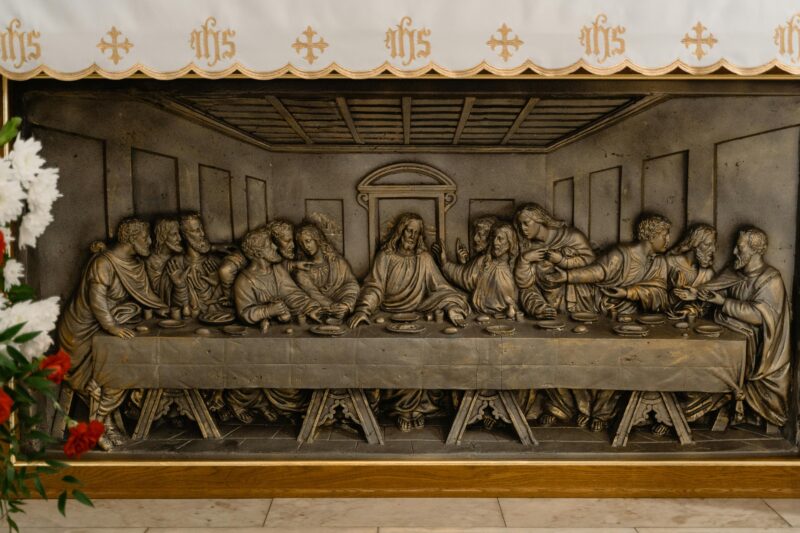
Building on Introduction to Holy Communion, this course aims to explore the Holy Eucharist in greater depth as the source and summit of Christian life. It will delve into the scriptural foundations of the sacrament, such as the Emmaus story, while appreciating Eucharistic themes in classical paintings and sacred music.

Participants will also discover how the Eucharist transcends Sunday worship, inspiring daily life and social justice, and enriching their ministry.

  • Extraordinary ministers of Holy Communion who provide a service during church masses, in residential elderly homes or homebound sick persons.
  • Those who wish to learn to appreciate more the sacrament of Holy Communion.
  • Those who are starting their service as extraordinary ministers.

Please Note: Doing this course does not entitle the student to become an extraordinary minister of Holy Communion. Extraordinary ministers are chosen by the parish priests.

Target Audience Age: 18+

This course comprises pre-recorded lectures, which can be accessed on the Moodle platform at a time and pace that suits you. The lectures will cover the following topics:

  • The Emmaus Narrative
  • The Eucharist in Sacred Art
  • The Eucharist in Sacred Music
  • The Eucharist – the spirituality of the ministry
  • Living the Mass

This course has one exit certificate options:

1. Certificate of Participation

Students will receive a Certificate of Participation upon completing all recordings and successfully passing a short online assessment.

Language: Applicants must be proficient in both Maltese and English.

Digital: Applicants must be digitally literate particularly, in use of office suites and internet access.
It is suggested that applicants complete the ‘Introduction to Holy Communion’ course before enrolling in this course.

King David: Hero or Villain?

The course aims to provide participants with a better understanding of the figure of King David in the Bible. Various aspects relating to Kind David will be considered, shedding light both on aspects for which he may be considered a hero, and also on those for which he may be considered a villain. This is a study whereby one is called to reflect on the different facets, both positive and negative, that may be present in the same character. Among these are the ambitious nature, the traitor, being a sinner, the father figure, and also his saintly aspects.

This course is suitable for pastoral workers helping in the Ministry of the Word. It is also ideal for people who would like to delve deeper in knowledge about King David and all Christians who would like to continue to invest in their relationship with God.

Target Audience Age: 18+

The course will take place on Wednesdays from 6:00pm to 8:00pm

Students have the option to join this course online via Zoom

28th January 2026David the Ambitious
4th February 2026David the Traitor
11th February 2026David the Sinner
18th February 2026David the Father
25th February 2026David the Saint

This course has three exit certificate options:

1. Certificate of Attendance

The student will receive a Certificate of Attendance when attending a minimum of 80% of all contact hours for this course.

2. Certificate of Participation

The student will receive a Certificate of Participation when attending a minimum of 80% of all contact hours for this course and pass from short multiple-choice exam.

3. Certificate of Achievement

To obtain a Certificate of Achievement, students must attend a minimum of 80% of all contact hour and pass from a short multiple-choice exam and an assignment.

Language: Applicants must be proficient in both Maltese and English.

Digital: Applicants must be digitally literate particularly, in use of office suites and internet access.

Growing in the Franciscan Way

  Various

This course offers a deepening exploration of Franciscan spirituality through key themes and figures that shaped the Franciscan movement. Building on the foundations of St Francis’ life and teachings, participants will engage with the spiritual journeys of St Clare and the 2nd Order, the emergence of the 3rd Order, and the lived experience of Franciscan values in contemporary life. Special focus will be given to Francis’ relationship with the Eucharist, the Holy Spirit, and the Blessed Virgin Mary, while also reflecting on how the Franciscan vision continues to inspire efforts toward justice, peace, and care for the vulnerable. The course will highlight the relevance of the Franciscan charism as a model for renewal in the Church today.

This course is designed for Franciscan Collaborators and individuals interested to explore and deepen their knowledge in Franciscan Spirituality.

Target Audience Age: 18+

October 2025

Date and TimeSessionVenue
11th October
9:30am – 12:30pm
Clare and the Monastic Life
(the 2nd Order)
St. Clare’s Monastery
San Gwann
14th October
6:00pm – 8:00pm
Saint Francis and the
Blessed Virgin Mary
ĊAK, Birkirkara
21th October
6:00pm – 8:00pm
The Rules of St. Clare
and the 3rd Order
ĊAK, Birkirkara
28th October
6:00pm – 8:00pm
The Inspiration of Saint Francis;
a model for the Church
ĊAK, Birkirkara

November 2025

4th November
6:00pm – 8:00pm
The 3rd Order and the
Secular Franciscan Order
ĊAK, Birkirkara
8th November
9:30am – 12:30pm
SeminarConvent of the Capuchins,
Kalkara
11th November
6:00pm – 8:00pm
Social Communication and the
Franciscan Spirituality
ĊAK, Birkirkara
18th November
6:00pm – 8:00pm
St Francis and the EucharistĊAK, Birkirkara
25th November
6:00pm – 8:00pm
The role of the Holy Spirit in the life of
Saint Francis
ĊAK, Birkirkara

December 2025

2nd December
6:00pm – 8:00pm
The Franciscan ideal for more just social systemsĊAK, Birkirkara
9th December
6:00pm – 8:00pm
Important figures inspired
by Saint Francis
ĊAK, Birkirkara

January 2026

17th January
9am – 12:30pm
Closing SeminarBurmarrad Parish House

This course has three exit certificate options:

1. Certificate of Attendance

The student will receive a Certificate of Attendance when attending a minimum of 80% of all contact hours for this course.

2. Certificate of Participation

The student will receive a Certificate of Participation when attending a minimum of 80% of all contact hours for this course and pass from short multiple-choice exam.

3. Certificate of Achievement

To obtain a Certificate of Achievement, students must attend a minimum of 80% of all contact hour and pass from a short multiple-choice exam and a presentation.

Language: Applicants must be proficient in both Maltese and English.

Digital: Applicants must be digitally literate particularly, in use of office suites and internet access.
Walking with the Bereaved

This course is eligible for the Get Formed! scheme, allowing students to reclaim 70% of their course fees upon completion. For more information, visit: https://pfi.edu.mt/get-formed/.

This introductory course is designed for pastoral workers and lay people who assist the funeral arrangements and preparations within the parish together with individuals who offer support to mourning individuals. The course aims to equip participants with essential training and awareness to provide compassionate and emotionally sensitive support to grieving individuals.

This course is designed for pastoral workers who assist with funeral arrangements and preparations within the parish and other lay people who support mourning individuals.

Target Audience Age: 18+

The course will take place on Mondays from 6:00pm to 8:00pm

DateSession
6th October 2025Understanding Grief and Bereavement
13th October 2025Types of Grief with Biblical Examples
20th October 2025The Role of the Pastoral Workers in Grief Support
27th October 2025Supporting Grieving Families and Communities
10th November 2025Walking with the Bereaved Beyond the Funeral
17th November 2025Long-Term Bereavement Care and Self-Care for Pastors

This course has three exit certificate options:

1. Certificate of Attendance

The student will receive a Certificate of Attendance when attending a minimum of 80% of all contact hours for this course.

2. Certificate of Participation

The student will receive a Certificate of Participation when attending a minimum of 80% of all contact hours for this course and pass from short multiple-choice exam.

3. Certificate of Achievement

To obtain a Certificate of Achievement, students must attend a minimum of 80% of all contact hour and pass from a short multiple-choice exam and an assignment.

Language: Applicants must be proficient in both Maltese and English.

Digital: Applicants must be digitally literate particularly, in use of office suites and internet access.

Award in Safeguarding Children and Vulnerable Adults

MQF

The Pastoral Formation Institute is licensed by MFHEA
(Licence #: 2013-FHI-028) as a Further and Higher Educational Institute. The Award in Safeguarding Children and Vulnerable Adults is accredited at EQF/MQF Level 4, as a Higher Education Programme.

The short course – Safeguarding Children and Vulnerable Adults will assist staff and volunteers in recognising the key principles of safeguarding and in creating a safe environment for children, young people and vulnerable adults.

Employees and volunteers working with children and vulnerable adults and handling their data.

May – June 2026
Lecturing Period
Mode of DeliveryDate & TimeVenue
In-person9th May 2026
from 9:00am to 12:00pm
Ta’ Mlit Pastoral Centre, Mosta
Recorded Material9th – 23rd May 2026Recorded videos will be accessible online via our Moodle VLE platform
Assessment Period
AssessmentAvailable FromDue by
Short Multiple-Choice Online Exam9th May 202623rd May 2026
Reflective Journal9th May 20269th June 2026
LO1 – Competence

By the end of the programme, the learner will have acquired a good enough combination of the below mentioned skills and knowledge, so much so that s/he will be competent enough to provide an emotionally, mentally and spiritually safe working environment for children and/or vulnerable adults; can recognise and deal with different signs of abuse; can comply with national laws, policies and procedures concerning safeguarding and can refer and collaborate with professionals in the field to ensure that the person in question is not being abused.

LO2 – Knowledge

By the end of the programme, the learner will be able to: a) identify the principles of safeguarding; b) familiarise himself/herself with safeguarding policies; c) identify signs and symptoms of different types of abuse; d) know the disclosures of abuse; e) know the legal obligations related to the Protection of Minors; (Registration) Act (2011) and the Minor Protection (Alternative Care) Act (2019).

LO3 – Skill

By the end of the programme, the learner will be able to: a) practice the principles of safeguarding; b) practice professional boundaries; c) use a standard response to a disclosure of abuse; d) be able to recognise signs and symptoms of different types of abuse; e) identify the actions to take if you have a concern and also identify who can help;

This course has three exit certificate options: 

  1. Certificate of Attendance

A Certificate of Attendance will be awarded to students who:

  • attend the in‑person session,
  • watch all the recorded material, and
  • do not submit any course assessments.
  1. Certificate of Participation 

A Certificate of Participation will be rewarded to students who:

  • attend the in‑person session,
  • watch all the recorded material, and
  • submit and pass a short online multiple‑choice examination
  1. Certificate of Achievement 

A Certificate of Achievement is awarded to students who successfully concluded the course, that is;

  • attending the in‑person lecture and completing all online videos,
  • submit and pass a short online multiple‑choice examination
  • submit and pass a short reflective journal.

Students who obtain the Certificate of Achievement will also receive an MFHEA‑recognised certificate and transcript at MQF Level 4 (1 ECTS credit).

Click here to view the PFI’s Grading System

Awarding Body: Pastoral Formation Institute

There are no qualifications required for this course. The only requisites are:

Language competences: The student is required to have an end of primary school level of understanding of Maltese and English.

Digital competences: The student is required to be digitally literate, including knowing how to access the internet and use a word processor.

This course is mandatory requirement for all staff and volunteers working for the Church in Malta and part of the Safeguarding Clearance Certificate.