


Archives

Award in Pastoral Care and Chaplaincy in Schools

Pastoral Care in Schools - team work
MQF

The Pastoral Formation Institute is licensed by MFHEA
(Licence #: 2013-FHI-023) as a Further and Higher Educational Institute. The Award in Pastoral Care and Chaplaincy in Schools is accredited at EQF/MQF Level 6, as a Higher Education Programme.


Pastoral Care and Chaplaincy in Schools are considered bridges between faiths and cultures in the contemporary context. Those involved in this mission must be well prepared to effectively share the joy of the Gospel and its values within schools in today’s pluralistic society. This course provides participants with the knowledge and practical skills needed to enhance effective Pastoral Care and Chaplaincy in Schools. It assists participants in developing a range of essential skills for this ministry, including reflective, analytical, critical, and synthetic thinking, as well as leadership, collaboration, interpersonal communication, listening, planning, and implementation.

This course is open to all individuals involved in the educational sector or with an expressed interest in working in this area.

CodeMode of DeliveryValue
PFE6005In-person (Face-to-Face Learning)3 ECTS

In this module, participants will be introduced to the concept of Pastoral Care and Chaplaincy in schools and will be prepared for this mission. Participants will have the opportunity to discuss and learn how Pastoral Care and Chaplaincy can facilitate dialogue between faiths and cultures in our contemporary pluralistic society. We will articulate how to nurture a wholesome attitude towards life, different religions and cultures, and the whole of creation, founded on Gospel values and the teachings of the Church.

CodeMode of DeliveryValue
PFE6006In-person (Face-to-Face Learning)3 ECTS

This module offers participants the opportunity to examine the richness and challenges of a multicultural and multifaith environment within the school community in the context of Pastoral Theology.

In the context of Pastoral Care/Chaplaincy, Pastoral Theology enables those involved in this ministry to nurture in their own lives and within the entire school community the truth that:

“The nature of the reign of God is the communion of all human beings between themselves and with God.  

(Pope John Paul II, Redemptoris Missio)

This theme will be discussed through selected Scriptural texts and texts from the teachings of the Church and early Church Fathers.

CodeMode of DeliveryValue
PFE6007In-person (Face-to-Face Learning)3 ECTS

By the end of this module, participants will be able to identify various ways of fostering a relationship with the Transcendent/God through different methods of prayer. Participants will become more familiar with:

  • The meaning of spirituality
  • The spiritual development of the young (4-10 yrs.), youth (11-16 yrs.), and adults (18+), keeping in mind contemporary cultures.
  • How to plan and conduct various spiritual encounters and activities with the young (4-10 yrs.), youth (11-16 yrs.), and adults (18+).
CodeMode of DeliveryValue
PFE6008In-person (Face-to-Face Learning)3 ECTS

The aim of this module is to enable participants to build resources for designing and enriching liturgical and religious celebrations/activities in schools by exploring and adapting artistic expressions, media, and IT resources in the context of Pastoral Care/Chaplaincy.

CodeMode of DeliveryValue
PFE6009In-person (Face-to-Face Learning)5 ECTS

This module is divided into three parts:

Part One: One-day seminar – This seminar will enable participants to relate various leadership models and collaboration strategies to Pastoral Care/Chaplaincy in Schools.

Part Two: Half-day spiritual retreat – Participants will have time to reflect on their own spiritual journey in the light of selected Biblical texts and spiritual literature.

Part Three: Online reading – Four papers will be presented as online reading. These papers are related to all the modules and will enable participants to reflect on the different ways that Pastoral Care/Chaplaincy is expressed around the world. Participants will be asked to critically analyze and review these articles and use them to evaluate national experiences.


The course will take place once a week on Wednesdays from 3:30 pm to 5:30pm.

Seminar
DateTimeVenue
5th October 20248:30am – 12:30pmArchbishop’s Seminary, Tal-Virtù, Rabat
PFE6005 Module 1 – Pastoral Care/Chaplaincy in Schools: Promoting Human Dignity and Gospel Values in Contemporary Cultures
DateTimeVenue
9th, 16th, 23rd and 30th October 202415:30 – 17:30Ta’ Mlit Pastoral Centre, Mosta
6th, 13th and 20th November 202415:30 – 17:30Ta’ Mlit Pastoral Centre, Mosta

PFE6006 Module 2 – Nurturing Spirituality Through Pastoral Care/Chaplaincy in Schools
DateTimeVenue
27th November 202415:30-17:30Ta’ Mlit Pastoral Centre, Mosta
4th, 11th and 18th December 202415:30-17:30Ta’ Mlit Pastoral Centre, Mosta
8th, 15th and 22nd January 202515:30-17:30Ta’ Mlit Pastoral Centre, Mosta

PFE6007 Module 3 – Pastoral Theology in Relation to Pastoral Care/Chaplaincy in Schools
DateTimeVenue
29th January 202515:30-17:30Ta’ Mlit Pastoral Centre, Mosta
5th, 12th, 19th and 26th February 202515:30-17:30Ta’ Mlit Pastoral Centre, Mosta
5th and 12th March 202515:30-17:30Ta’ Mlit Pastoral Centre, Mosta

PFE6008 Module 4 – Practical Ways of Enriching Liturgical Celebrations and Religious Activities in Schools
DateTimeVenue
26th March 202515:30-17:30Ta’ Mlit Pastoral Centre, Mosta
2nd, 9th and 30th April 202515:30-17:30Ta’ Mlit Pastoral Centre, Mosta
7th, 14th and 21st May 202515:30-17:30Ta’ Mlit Pastoral Centre, Mosta
PFE6009 Module 5 – Internalizing and Evaluating Various Perspectives of Pastoral Care/Chaplaincy in Schools
DateTimeVenue
June 2025N/AN/A
Spiritual Retreat
DateTimeVenue
21st June 2025TBATBA

This course has one exit certificate option:

Certificate of Achievement

To receive a Certificate of Achievement, the student must:

  • Attend a minimum of 80% of all contact hours for this course.
  • Complete and pass assessments for all modules.
MQF

The Pastoral Formation Institute is licensed by MFHEA
(Licence #: 2013-FHI-023) as a Further and Higher Educational Institute. The Award in Pastoral Care and Chaplaincy in Schools is accredited at EQF/MQF Level 6, as a Higher Education Programme.

This course contributes towards the Accelerated Progression Scheme for educators as per the Sectoral Agreement signed in 2017.

Get Qualified
Students completing the Higher Education Award in Pastoral Care/Chaplaincy in Schools can apply for the Get Qualified Scheme, which will enable them to benefit from a tax credit of 70% of the costs incurred (i.e., €245 will be refunded for this course).
  • Full qualification at MQF Level 6 or higher. Kindly submit a copy of your highest qualification in the application form below.
  • Proficiency in English and/or Maltese language
  • Basic digital competencies (able to do research)
  • Expressed interest in Pastoral Care and/or chaplaincy in state or non-state schools

Applicants who do not meet these requirements may be refunded if deemed ineligible for the course.


For courses offered in face-to-face learning and blended learning, it is required that applicants reside in the Maltese islands and use their Maltese address in their application form.

For further information regarding visa requirements, see Identity Malta’s VISA requirements for third-country nationals.


Award in Creating & Animating Prayer Spaces

MQF

The Pastoral Formation Institute is licensed by MFHEA
(Licence #: 2013-FHI-023) as a Further and Higher Educational Institute. The Award in Creating and Animating Prayer Spaces is accredited at EQF/MQF Level 5, as a Higher Education Programme.

Students who successfully complete this course may apply for the Get Qualified Scheme which will enable them to benefit from a tax credit of 70% of the costs incurred (i.e. €87.50 will be refunded for this course).

This course offers participants a comprehensive understanding of establishing and managing prayer spaces within diverse settings. Through theoretical insights and practical training, participants will gain the necessary knowledge and skills to create and oversee prayer spaces effectively. Additionally, the course provides a transformative journey for participants, fostering deeper connections with themselves, others, the world, and the divine through engaging with prayer spaces. Participants will learn to accompany others on their spiritual journeys, facilitating exploration of faith, spirituality, and life’s fundamental questions in a supportive and interactive environment.

Emphasizing the shift from mere functionality to a more meaningful existence, the course encourages participants to appreciate and reflect upon relationships, recognizing the profound impact of mindful engagement. Whether in educational institutions, community centres, workplaces, or outdoor settings, participants will explore the versatility of prayer spaces, understanding their potential to enrich lives and foster spiritual growth.

  1. Define what a prayer space is;
  2. Identify different age groups of children and young people attending the prayer space;
  3. Communicate in different ways with children, young people, or adults according to their age, culture, and language during a prayer space;
  4. Identify suitable interested members of the staff/personnel who are willing to form a team to prepare and animate prayer spaces in their respective schools;
  5. Draw up a plan for planning, preparing, setting up, and running prayer spaces;
  6. Report what educators and students said after they have experienced prayer spaces for themselves;
  7. Evaluate what went well, identify difficulties and challenges in setting a prayer space;
  8. Understand that at the most basic level, prayer spaces give students a way to reflect and develop reflective thinking skills in terms of the four key relationships: the self, others, the world, and God;
  9. Make a connection between prayer spaces and other subjects
  1. Reflect personally on a prayer space;
  2. Plan a prayer space;
  3. Prepare for the setting of prayer spaces;
  4. Create simple and clear instruction cards, and prepare the resources related to the prayer space;
  5. Set up the physical prayer space in any given space and/or venue.
  6. Demonstrate a welcoming attitude to all children and young people of all faith and none who will be experiencing a prayer space;
  7. Lead the children and young people to the safe, hands-on, creative prayer space and, when necessary, animate the prayer spaces;
  8. Show a sense of accompaniment and being there for the person;
  9. Operate with other members of staff who wish to give a helping hand before, during, and after the setting of a prayer space activity;
  10. Recruit and train a prayer space team;
  11. Run a Prayer Space;
  12. Do a follow-up of a prayer spaces session.

This course is targeted at all those who wish to help children, young people, and adults grow in their prayer life, namely:

  • Educators,
  • Catechists,
  • Youth workers,
  • Youth leaders,
  • Youth ministers,
  • Religious counsellors,
  • Chaplains and lay chaplains,
  • Priests and religious.  

Target Audience Age: 18+

Throughout the course, participants will have the opportunity to engage with prayer spaces first-hand.

Participants will be introduced to the concepts of prayer, spirituality, and religion. Participants will also become aware of the differences between superficiality and meaning-making, focusing on being, and the development of symbolic language.

Participants will explore the significance of prayer spaces, which embody spiritual, reflective, inclusive, professional, and Christian values.

Participants will learn that prayer spaces help individuals reflect and develop reflective thinking skills, viewing this process in terms of four key relationships: the self, other people, the world, and the sacred/divine. They will also learn that spirituality is inherent in everyone, and that God, in various ways, interacts with and cares for each individual.

Participants will learn how to initiate prayer spaces.

Participants will learn how to select and develop prayer activities aimed at the self, others, the world, and God, incorporating a variety of learning styles, including writing, listening, observation, reading, and hands-on activities.

Participants will learn how to recruit and train an effective prayer space team. Participants will learn to select individuals who embody qualities such as prayerfulness, inclusivity, reflection, professionalism, and safety. Additionally, participants will discover techniques for establishing a welcoming prayer space accessible to all visitors. They will also gain insights into collecting feedback and producing follow-up reports.

This course will take place on Mondays and Wednesdays from 5:00pm – 8:00pm

DateSession
17th November 2025Introduction to Prayer
19th November 2025The Values of Prayer Spaces
24th November 2025The Purpose of Prayer Spaces and Prayer Spaces Theology
26th November 2025Preparing for the Setting of Prayer Spaces
1st December 2025Creating Prayer Activities
3rd December 2025Recruiting and Training a Prayer Space Team,
Running a Prayer Space and Follow-up

Certification:  

This course has three exit certificate options: 

  1. Certificate of Attendance

To obtain a Certificate of Attendance, students must attend at least 80% of the course’s contact hours. 

2. Certificate of Participation

To obtain a Certificate of Participation, students must attend at least 80% of the course’s contact hours and pass from short multiple-choice exam.

3. Certificate of Achievement 

To obtain a Certificate of Achievement, students must: 

  • attend at least 80% of the course’s contact hours 
  • pass from short multiple-choice online exam
  • pass from written assignment

EQF/MQF Level: Level 5

Accreditation Category: Higher Education Programme

Total ECTS: 2 ECTS

MQF

The Pastoral Formation Institute is licensed by MFHEA
(Licence #: 2013-FHI-023) as a Further and Higher Educational Institute. The Award in Creating and Animating Prayer Spaces is accredited at EQF/MQF Level 5, as a Higher Education Programme.

Funding
Students completing the Award in Creating & Animating Prayer Spaces may apply for the Get Qualified Scheme which will enable them to benefit from a tax credit of 70% of the costs incurred (i.e. €87.50 will be refunded for this course).

Teaching and Awarding Institution: Pastoral Formation Institute

Qualifications: Every application will be considered on its individual merits. The Pastoral Formation Institute accepts a wide range of qualifications, and we always try to judge applications on the basis of academic potential. We do consider a very wide range of academic, vocational, and professional qualifications, as well as work and other appropriate experiences and skills. Kindly submit a copy of your highest qualification in the application form below.

Language: Primary level understanding of Maltese and English.

Digital: Knows how to access the internet and use a word processor.

The Sacrament of Baptism for Parishes

This course is aimed at parents who choose to baptize their child. They will be invited to follow this course from the comfort of their home. Firstly, they will learn about the theology of baptism and what baptism entails. They will then proceed to go through the rite of baptism, understanding its various moments so that during the celebration, they will have a deeper understanding of the process. Finally, these parents will be given suggestions on how to live out the baptismal promises within their family.

New parents

Target Audience Age: 18+

The course will be delivered online through a series of recorded videos accessible on our VLE platform.

SessionTheme
Session 1The Theology of Baptism – What is Baptism?
Session 2The Rite of Baptism
Session 3Living out the promises of Baptism

This course has one exit certificate options: 

  1. Certificate of Attendance

The student will receive a Certificate of Attendance when watching all recorded lectures available on VLE platform.

Awarding Institution: Pastoral Formation Institute

Language: Applicants must be fluent in Maltese and have basic proficiency in English.

Digital: Applicants must be digitally literate, especially on how to access the internet and use office suites.

Introduction to Youth Ministry

Introduction to Youth Ministry

This course is eligible for the Get Formed! scheme, allowing students to reclaim 70% of their course fees upon completion. For more information, visit: https://pfi.edu.mt/get-formed/.

This course will serve as an introduction and foundation for youth ministry. Youth ministers, youth leaders and animators will reflect on who they are, their journey of faith and the call of being a youth minister/youth leader/animator in today’s society. This will involve a discussion on ‘tools’ that believers should have to live faith.

  • Serving youth ministers/youth leaders/animators
  • Youth aspiring to become youth ministers/youth leaders/animators

Target Audience Age: 16+

TBA

This course has two exit certificate options:

1. Certificate of Attendance

A Certificate of Attendance will be awarded to students who have attended at least 80% of contact hours for this course.

2. Certificate of Achievement

A Certificate of Achievement will be awarded to students who have attended at least 80% of contact hours for this course and successfully complete and pass written assessment.

Digital: Applicants are required to be digitally literate, including knowing how to access the internet and use office suite software.

Pastoral Initiatives in Lent

The participants will engage in preparations for the imminent Lenten season, during which the Diakonia, spiritual, and cultural dimensions of this significant period in the Church will be emphasized and explored. This preparation aims to equip and enrich them for their pastoral roles in their respective parishes and communities, enabling them to guide others effectively on their journey during this special time of grace.

Upon acquiring new insights and skills, participants will be encouraged to collaborate with their parish priests in organizing and planning a schedule for Lent for their respective groups. This collaborative effort seeks to ensure a well-rounded and meaningful Lenten experience for the parish community, incorporating elements of Diakonia, spirituality, and culture to foster a deeper connection with the season’s spiritual significance.

If you are a registered pastoral worker with the Archdiocese of Malta, you can benefit from a 50% discount on this course. Start your application process as a pastoral worker on parrocci.knisja.mt/pfi.

  • Pastoral Workers, especially those involved in decision-making bodies.
  • Religious people and Priests
  • Individuals interested in the subject

Target Audience Age: 18+

Lectures will take place on Wednesdays from 6:00pm to 8:00pm

DateSession
10th January 2023Culture in Lent
17th January 2023Spirituality in Lent
24th January 2023Diakonia & Prayer Experiences

This course has two exit certificate options: 

  1. Certificate of Attendance

The student will receive a Certificate of Attendance when attending a minimum 80% of all contact hours for this course. 

  1. Certificate of Achievement  

To obtain a Certificate of Achievement, students must:

  • attend a minimum 80% of all contact hours
  • pass written assessment

Language: Applicants must be fluent in Maltese and have basic proficiency in English.

Digital: Applicants must be digitally literate, especially on how to access the internet and use office suites.

Introduction to Parish Ministry

Introduction to Parish Ministry

This course is eligible for the Get Formed! scheme, allowing students to reclaim 70% of their course fees upon completion. For more information, visit: https://pfi.edu.mt/get-formed/.

“If the parish proves capable of self-renewal and constant adaptivity, it continues to be ‘the Church living in the midst of the homes of her sons and daughters”

Pope Francis.

Throughout this course, participants will explore the parish as a significant symbol of God’s presence in our community. The course will start by delving into the contemporary reality of today’s parish. Participants will then proceed to learn about the different roles within the Church; identifying the decision-making bodies of the Church and different ministries in a parish, highlighting the importance of everyone’s participation. This will include a discussion on effective teamwork and service to others. Attendees will then be introduced to the principles of communal discernment, examining its definition, tools, and practical applications. The course will conclude by presenting a model of communal discernment, elucidating the different roles within it, and outlining the composition of discerning groups.

Specifically tailored for those actively involved in parish ministry, the course seeks to inspire a deeper commitment to the renewal of parishes, aligning them as vibrant evangelizing entities in today’s society, guided by recent teachings on parish life.

  • Pastoral Workers, especially those involved in decision-making bodies.
  • Individuals interested in the subject

Target Audience Age: 19+

TBA

This course has three exit certificate options:

1. Certificates of Attendance

The student will receive a Certificate of Attendance when attending a minimum 80% of all
contact hours for this course.

2. Certificate of Participation
The student will receive a Certificate of Participation when attending a minimum 80% of all
contact hours for this course and passing from short multiple-choice online exam.

3. Certificate of Achievement
The student will receive a Certificate of Achievement when:

  • attending a minimum 80% of all contact hours
  • passing short multiple-choice online exams and written assessment

Language: Applicants are required to have an understanding of Maltese and be fluent in English.
Digital: Applicants are required to be digitally literate especially, in office suites.

Award in Augustinian Spirituality for Educators

Augistinian Spirituality

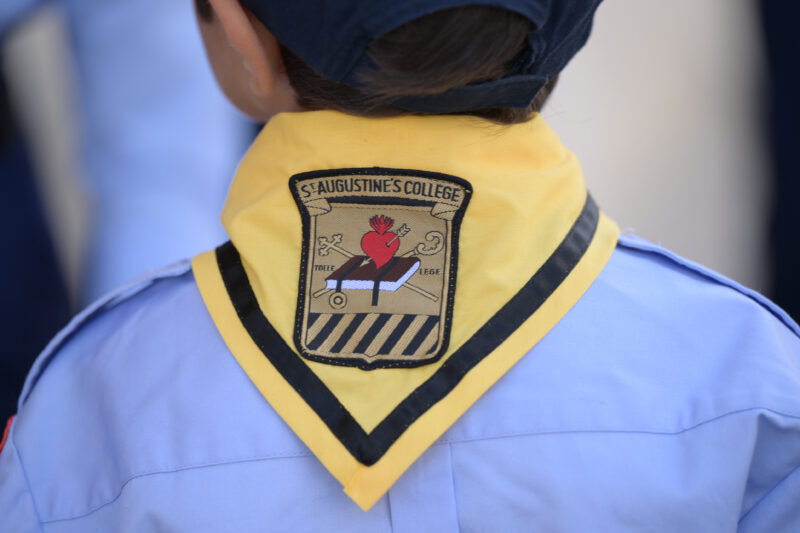
Elements of Augustinian charism and identity will be proposed in a meaningful manner to the building up of today’s society, especially in education. Thus, by exploring critically various aspects, the participants will grasp a deeper knowledge and experience of Augustinian values.

The main objective of the course is to present in a brief way the charism and the spirituality of the Augustinian Order through values and practical experience from education.

Dates will be announced soon.

Introduction to Diakonia

Introduction to Diakonia

This course is eligible for the Get Formed! scheme, allowing students to reclaim 70% of their course fees upon completion. For more information, visit: https://pfi.edu.mt/get-formed/.

This online course will explore the roots of Diakonia in Sacred Scripture and early Christian communities. Participants will have the opportunity to explore the relationship between Diakonia, faith, and prayer while delving into key areas of Catholic Social Teaching. Additionally, participants will examine the evolution of Diakonia in Malta and learn about available services.

This course is intended for:

  • Individuals who are already involved in Diakonia and wish to deepen their involvement in it.
  • Individuals who are interested in becoming involved in Diakonia.
  • Individuals who are interested in offering Diakonia-related services through a Church entity that they form part of.

N.B. completing this course does not entitle the student to automatically become a pastoral operator engaged in Djakonija within any specific parish. Such appointments are made at the discretion of the Parish Priest/Chaplain of the respective Parish/community.

Target Audience Age: 18+

The course will be delivered entirely through a series of pre-recorded lectures accessible on our VLE platform at a time and place convenient for you.

In these pre-recorded lectures, the following subjects will be covered:

  1. Biblical meaning of the word Diakonia and the word in the Old Testament;
  2. Djakonija in the New Testament with special reference to Acts;
  3. Djakonija in the first communities – the link between kerygma, koinonia, diakonia and liturgia;
  4. Personal prayer life leads me to Diakonia;
  5. The link between faith and life is one of the cornerstones of Christian theology and can be described in a variety of ways. For St Paul, “the only thing that counts is faith expressing itself through love.”;
  6. Evangelisation, djakonija and the digital age;
  7. Malta’s reality has changed – what are today’s sociological ‘pains’?;
  8. The Preferential Option for the Poor & the four pillars of Catholic social teaching; human dignity common good, subsidiarity and solidarity;
  9. How the Church in Malta was a pioneer in the Diakonia sector;
  10. What Diakonia services are being offered today? What are the different types of professionals working in this field?

This course has three exit certificate options: 

  1. Certificate of Attendance

The student will receive a Certificate of Attendance upon viewing all pre-recorded lectures on our VLE platform.

2. Certificate of Participation

The student will receive a Certificate of Participation upon viewing all pre-recorded lectures on our VLE platform and passing short multiple-choice examinations.

3. Certificate of Achievement

The student will receive a Certificate of Achievement upon viewing all pre-recorded lectures on our VLE platform, passing a short multiple-choice examination, and passing from a written assignment.

Language: A primary level understanding of Maltese and English is required.

Digital: Ability to access the internet and use an office suite is required.

Award in Introduction to Mixed Migration

MQF

The Pastoral Formation Institute is licensed by MFHEA,
(Licence #: 2013-FHI-023) as a Further and Higher Educational Institute.

The Award in Introduction to Mixed Migration is accredited at the EQF/MQF Level 7.

Migration is a reality that affects everyone in our societies. It is a subject of intense debate, yet often little is known about the complex realities migrants experience. The course, offered in collaboration with the Migrants Commission, will introduce participants to the realities of migration, with a particular focus on mixed and forced migration. The fundamental aim of this course is to make the process of addressing migration-related issues become one rooted in hospitality rather than fear, guided by the Roman Catholic tradition and its teachings, with an emphasis on nurturing a culture of encounter.

• Professionals working with migrants and need specialised knowledge to better serve the people they work with.
• Others interested to work in the field of migration, human rights and humanitarian work.

Target Audience`s Age: 19+

Lectures will be held on Mondays from 17:00 to 20:00

DateSession
Introduction and Definitions: Foundation Basics
Human Rights Perspective
Globalisation and International Development
Security Perspective
Social Justice Perspective

SESSION 1: INTRODUCTION AND DEFINITIONS: FOUNDATION BASICS

In this session, participants will acquire an understanding of the fundamental terminology employed in the context of access to benefits and services, particularly in relation to one’s protection status or lack thereof. The session will delve into the key factors compelling individuals to migrate, eligibility for lodging an asylum claim, and the criteria distinguishing a claim for International Protection from other claims. Participants will engage in a discussion of the following questions to explore these areas:

  1. Why is it essential to comprehend these definitions?
  2. Why do these definitions frequently face disputes or challenges?
  3. What are the historical or foundational roots of these definitions?

International and national protection statuses are granted based on specific criteria, and they may not encompass all the reasons prompting individuals to seek safety from harm. These definitions often give rise to contentious debates due to their significant implications for people’s lives, sometimes resulting in adverse consequences. For example:

  • Who qualifies for protection, and what are the five grounds for international protection?
  • Is family reunification an automatic process?
  • Can fleeing from the dire consequences of climate change, including droughts, economic hardship, and poverty, be considered grounds for protection?

SESSION 2: HUMAN RIGHTS PERSPECTIVE 

In this session, participants will delve into the Human Rights perspective, emphasizing that Human Rights are universal, yet real-world human rights violations remain prevalent. It is noteworthy that policies and practices related to migration often run counter to established human rights standards. The concept of the “right to have rights” is frequently a subject of debate, with rights even being called into question by the very politicians responsible for ensuring them. Civil society organizations anchor their efforts in a rights-based approach, upholding the binding agreements to which States have committed. Nonetheless, fundamental rights are systematically denied to migrants and asylum seekers, even within the broader European Union. This raises the question: are the European Convention on Human Rights and the EU Charter of Fundamental Rights (CFR) genuinely binding, or are they merely ideals?

Furthermore, we need to contextualize the Rights-Based Approach and the expectations it generates within the contemporary landscape of transnational social connections, diaspora communities, and the digitalized world we now inhabit, where relationships are no longer confined by national borders or identities. We will also discuss the “Paris Syndrome” in relation to the topics mentioned and the necessity of distinguishing between ensuring access to rights for all and acknowledging the expectations and realities faced by migrant individuals, including asylum seekers, upon their arrival in the European Union. As a case study, we will present and discuss the issue of unaccompanied children regularly going missing within the European Union, underscoring these troubling contradictions.

SESSION 3: GLOBALISATION and INTERNATIONAL DEVELOPMENT

Understanding the intricate historical context is paramount for interpreting present geopolitical scenarios and contemplating future predictions that carry a grim outlook. For example, it is projected that by 2050, an additional two million people will require food, signifying a 56% increase from 2010. Furthermore, 40% of the Earth’s land is arid, and rising temperatures are set to exacerbate this issue, rendering entire regions, like the Sahel, uninhabitable. This is a significant driving force behind the ongoing land acquisitions, whether by nations or billionaires. Although climate change is not yet recognized as grounds for international protection, it is widely anticipated to be a major catalyst for future wars, forced displacement, and migration, and this could unfold within our own lifetimes. The ongoing ravages of wars further contribute to these already catastrophic scenarios.

In this session, we will explore the interconnectedness of climate change, food (and water) security, and conflicts, drawing examples from Darfur, Syria, Yemen, and Ukraine. We will also briefly touch on International Development thinking from the migration perspective, underscoring the often overlooked and missed opportunities presented by diaspora communities. We will discuss our own experience of emigration as Maltese, serving as a case in point.

The UN Secretary-General’s Report “Our Common Agenda,” published in 2021, highlights the breakdown of trust at both the local and international levels as a major area of concern. Commitment 6 seeks to address this by urging the international community to commit to building trust. While the report primarily focuses on international relations, it also underscores trust as a shared underlying issue at the national level. Commitment 6 places emphasis on “envisioning the future together,” aligning with Pope Francis’ chosen theme for the World Day for Migrants and Refugees 2023.

Participants will also gain insight into the 17 Sustainable Development Goals (SDGs), with a specific focus on SDG 10, which aims to reduce inequalities among populations, with particular reference to migrant communities, and underscores the need to strengthen community ties for resilient futures.

SESSION 4: SECURITY PERSPECTIVE

In the past decade or so, the discourse surrounding security has taken centre stage in public discussions, with politicians and far-right groups often employing it as the dominant narrative when addressing migrants, especially asylum seekers attempting to reach European countries. Regrettably, this narrative frequently dehumanizes migrants. While security issues are undeniably important and legitimate threats exist, the evidence indicates that the direct link between individuals seeking international protection and security threats is often more populistic than evidence-based. Such discourse is often underpinned by racist and racialized arguments, as well as xenophobic sentiments influenced by a form of “orientalism.”

While national security is undoubtedly a valid concern, the question arises: are those arriving by boat truly a threat? The European Union has faced criticism for evolving into a ‘Fortress Europe’ in many respects, one of which is adopting a more defensive approach to border management. In this session, we will investigate the genuine threats to both national and European security. We will also explore whether irregular migration is indeed the core threat or if it is a convenient scapegoat that politicians employ within the broader context of geopolitical conflicts and trade negotiations.

SESSION 5: SOCIAL JUSTICE PERSPECTIVE

In this session, participants will explore the longstanding tradition of Roman Catholic Church social teachings, which encompass ways of welcoming and integrating migrant and refugee communities, as well as all minority groups. These teachings underscore the responsibilities that societies, communities, and their cultures bear towards these communities, and they provide insights into what integration should entail from a Roman Catholic perspective.

Throughout this session, participants will gain an understanding of Catholic Social Teaching and the concept of Integral Human Development, and why Pope Francis places such importance on it. This session will also acquaint participants with Catholic Social Teaching as it pertains to migrants and refugees, with a focus on specific circumstances within the Maltese context. Moreover, participants will engage in discussions about the significance of Catholic Social Teaching and how it can be applied at a pastoral level.

This section of the course will also provide a more in-depth exploration of the concept of ‘Integral Human Development’ and its evolution as a concept deeply rooted in the Magisterium of Vatican Council II and as developed by Pope Paul VI, Pope John Paul II, Pope Benedict XVI, and Pope Francis. Participants will come to understand how Justice underpins these teachings and shapes the relationships we are called to establish and nurture. Catholic Social Teaching, with its emphasis on Integral Human Development, informs Christians about our existential role and purpose on this planet: to become stewards of the Earth and of each other.

During this session, participants will learn about issues such as climate change, economic justice, food security, and how these intersect with forced migration. It will be highlighted that it is a mistake to view these issues as separate problems. Justice (and Truth) serves as the common root problem from which solutions can be derived.

Furthermore, participants will explore the specifics of providing pastoral care for migrants and refugees through the lens of Catholic Social Teaching, while employing the concept of intersectionality as a tool and approach. We will discuss how the notion of ‘Integral Human Development’ can help individuals appreciate the inherent interconnections that are inevitable for the human person.

There are TWO exit certificate options:

 Certificate of Attendance

A Certificate of Attendance will be awarded to students that attend at least 80% of all contact hours for this course. 

Certificate of Achievement

A Certificate of Achievement will be awarded to students that attend at least 80% of all contact hours for this course and pass from written assessment.

Qualifications: Applicants must possess an MQF level 6 or higher qualification.

Language: Applicants must be proficient in English.

Digital: Applicants must how to access the internet and use a word processor.

Introduction to Sports Ministry

  Catholic Institute, Floriana
Module 1 Introduction to Sports Ministry
MQF

The Pastoral Formation Institute is licensed by MFHEA
(Licence #: 2013-FHI-023) as a Further and Higher Educational Institute. The Award in Introduction to Sports Ministry is accredited at EQF/MQF Level 5.

This module presents an overall description of what Sports Ministry is and its role in the Church and world today. For this reason, this module will present and explore the Global Movement, delve into the history of the interaction between religion and sport, especially in Christianity, and present Biblical and Church documents’ references to sports. This module will also present the basic values of Sports Ministry which will be further explored throughout the other three follow-up modules:

  • Youth leaders interested in Sports/Physical Activity,  
  • Sports persons (coaches, athletes, club admin. members) interested in Sports Ministry,  
  • School chaplains, PE teachers, and Teachers interested in both areas (sports & spirituality). 

Target Audience Age: 18+

CodeMode of DeliveryValue
PFE5001– 2 Half-Day Seminars
– Practicum Sessions
– 2 Lectures
2 ECTS

Lecturers:  Rev Bernard Micallef

Mode of Attendance: Part-Time
SessionDatesTimesVenue
Hal-Day Seminar21.10.202309:00 – 12:00Archbishop`s Seminary, Rabat
Tuesday24.10.202318:00 – 20:00Catholic Institute Floriana
Tuesday31.10.202318:00 – 20:00Catholic Institute Floriana
Hal-Day Seminar04.11.202309:00 – 12:00Archbishop`s Seminary, Rabat

Assessment: Written Assessment

Assessment Explanation: To engage with a Christian-based organisation and devise either a plan of how a specific sports-based programme could be set up in their respective organisation or focus on one specific event/activity that can be held within the remit of the organisation. Eg. Lenten sessions using sports etc. 


Final Award: Award in Sports Ministry

Duration: 4 sessions, part-time including:

  • Contact hours – 14 hours
  • Supervised Placement and Practice Hours – 0 hours
  • Self-Study Hours – 26 hours
  • Assessment Hours – 10 hours

Click here to view the PFI`s Grading System

Certification: A sealed Certificate together with a Certificate supplement after successful* completion of the course

*To obtain a Certificate of Achievement a student must; Attend a minimum of 80% of each module and Pass successfully the assignment

EQF/MQF Level: Level 5

Accreditation Category: Award

Total ECTS: 2 ECTS

Award Institution: Pastoral Formation Institute

Teaching Institution: Pastoral Formation Institute

MQF

The Pastoral Formation Institute is licensed by MFHEA
(Licence #: 2013-FHI-023) as a Further and Higher Educational Institute. The Award in Introduction to Sports Ministry is accredited at EQF/MQF Level 5.

Applicants must be in possession of:

  • Proficient in English  
  • Minimum Level: O level or equivalent 
  • Expressed interest in Evangelisation and Sport 
  • Participants must present POMA certification and clean police conduct. 

For courses offered in face-to-face learning and Blended Learning, it is required that applicants reside in the Maltese Islands and use their Maltese address in their application form.

For further information regarding visa requirements, head to Identity Malta’s VISA requirement for third-country nationals.